
Wow, it’s been a loooooong time since we last saw Paddy and Plunkett, hasn’t it? So perhaps it’s appropriate that we catch up with them just as they’re about to venture into another place that the world forgot about for a while – the Lost Gardens of Heligan!

First, they took a peek through this hole in the fence, and decided that it would be an excellent place for a day’s exploring. Unfortunately, that window is just a liiiiiiiittle too small for them to climb through. Could it be that they’ll actually have to -GASP- pay an entrance fee for once?
Apparently not.
 If you’re Beastie-sized, stowing away on a passing wheelbarrow is always an option. And once they were inside, they were quickly able to win over the staff with their Irish charm.

Great! Let’s celebrate with a snack. Pineapple, anyone?
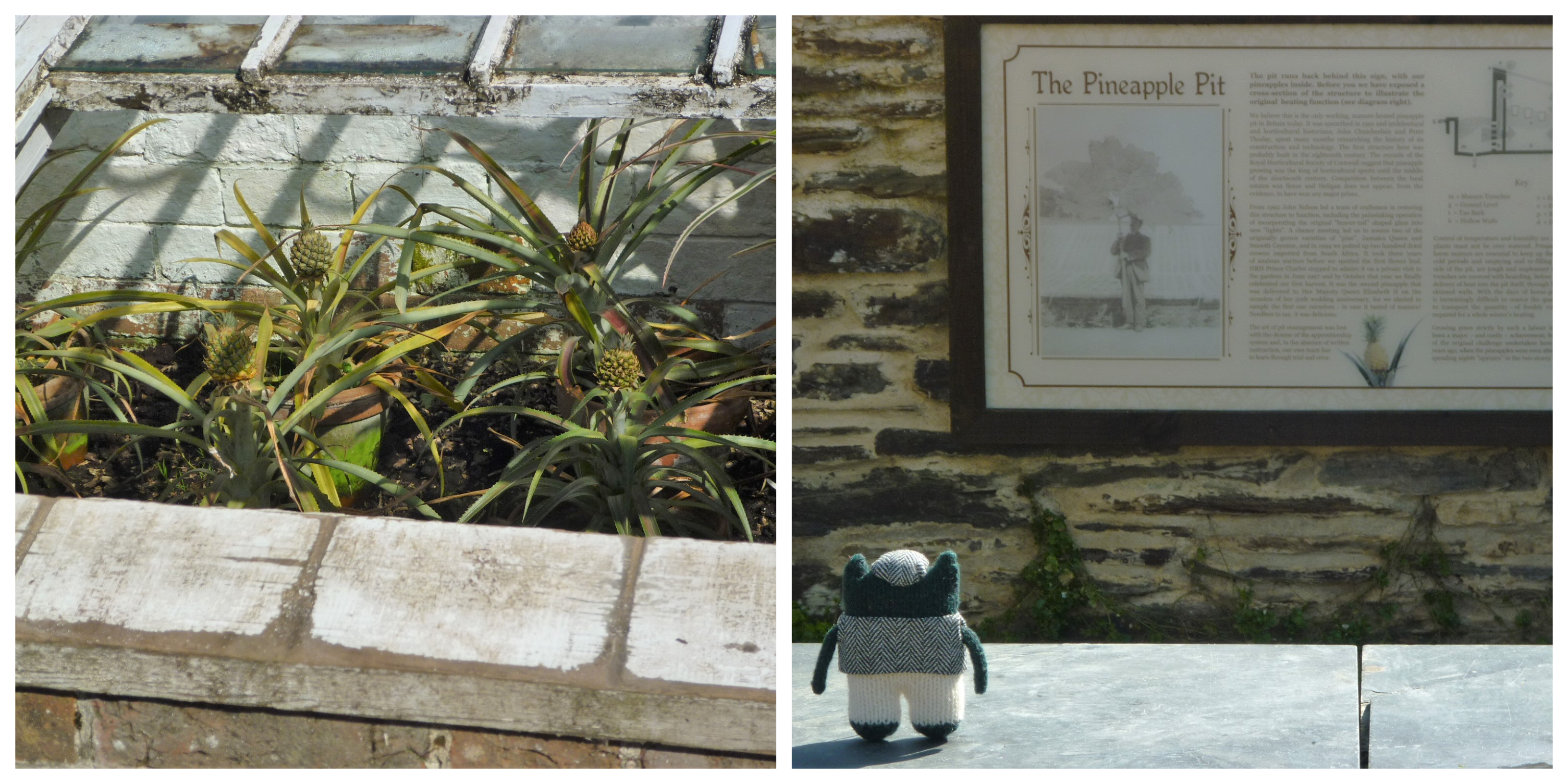 You can’t see Paddy in these photos, because he’d already hopped over the wall and started munching. However, Plunkett wasn’t so sure…
“Paddy, it says on the sign that the heat these pineapples need to grow comes from filling the pit trenches with a steady supply of fresh horse manure.”
“Yes, Plunkett, but it also says that the pineapples are delicious… And one of the first ones harvested after this pit was unearthed and rebuilt in the 1990s was sent to the Queen as a 50th wedding anniversary gift! So if they’re good enough for her, they’re good enough for me. YUM!”
And what better way to celebrate the restoration of the only surviving pineapple pit in Britain? Apparently, these were quite the thing back in the 19th century, with gardeners in the “big houses” competing to see who could grow the tastiest pineapples! Unfortunately, the skills involved in maintaining one were pretty much lost – with the decline of apprenticeships, the knowledge was no longer being passed along, and no-one thought to write it down. It was only through trial and error that the staff at Heligan were able to make this project bear fruit… And the Beasties were more than happy to show a little appreciation for their efforts.
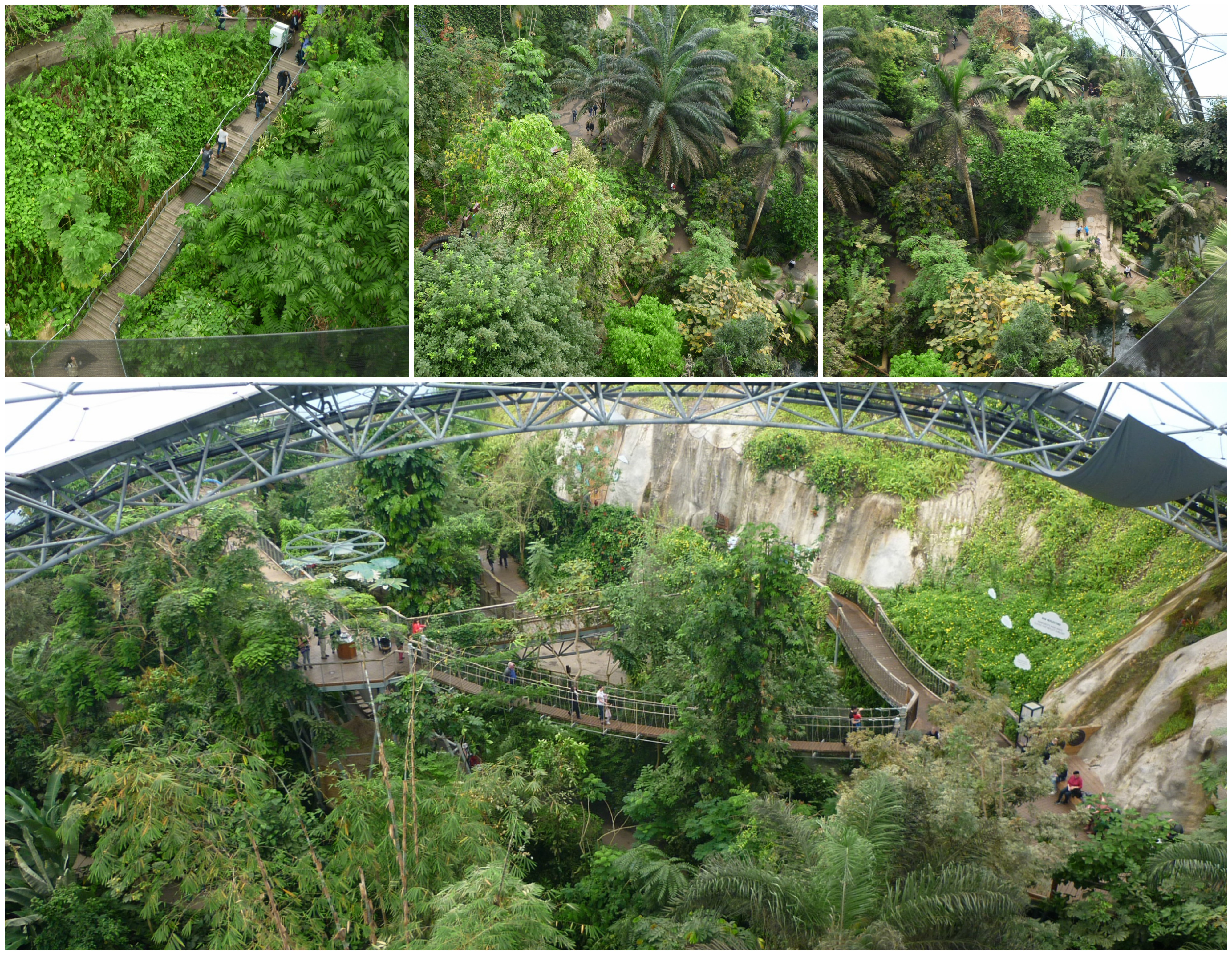
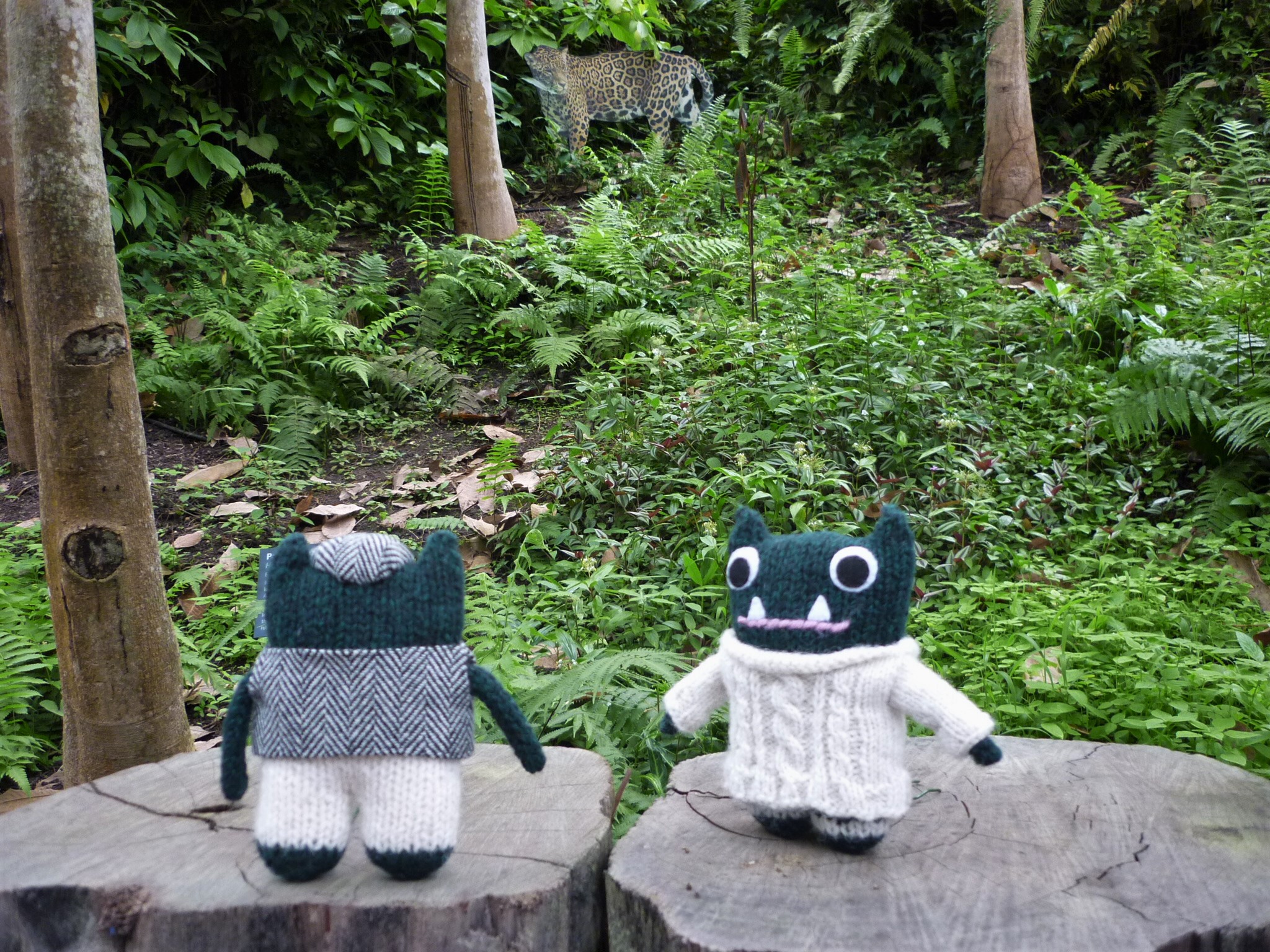
Suitably stuffed, the boys wandered a little further, and found themselves in the jungle! Luckily, they’re old hands at jungle exploration, having recently spent time at the Eden Project. And after eating all that pineapple, it’s incredible that this rope bridge was able to take the strain of them walking across it!
 On the other side, the boys worked off a little bit of their recent extravagance by clambering around on the firewood pile…
 … But a terrifying sight awaited them on the other side!
 “Oh no! What happened here?”
But Plunkett was soon able to put two and two together, when he spotted this…
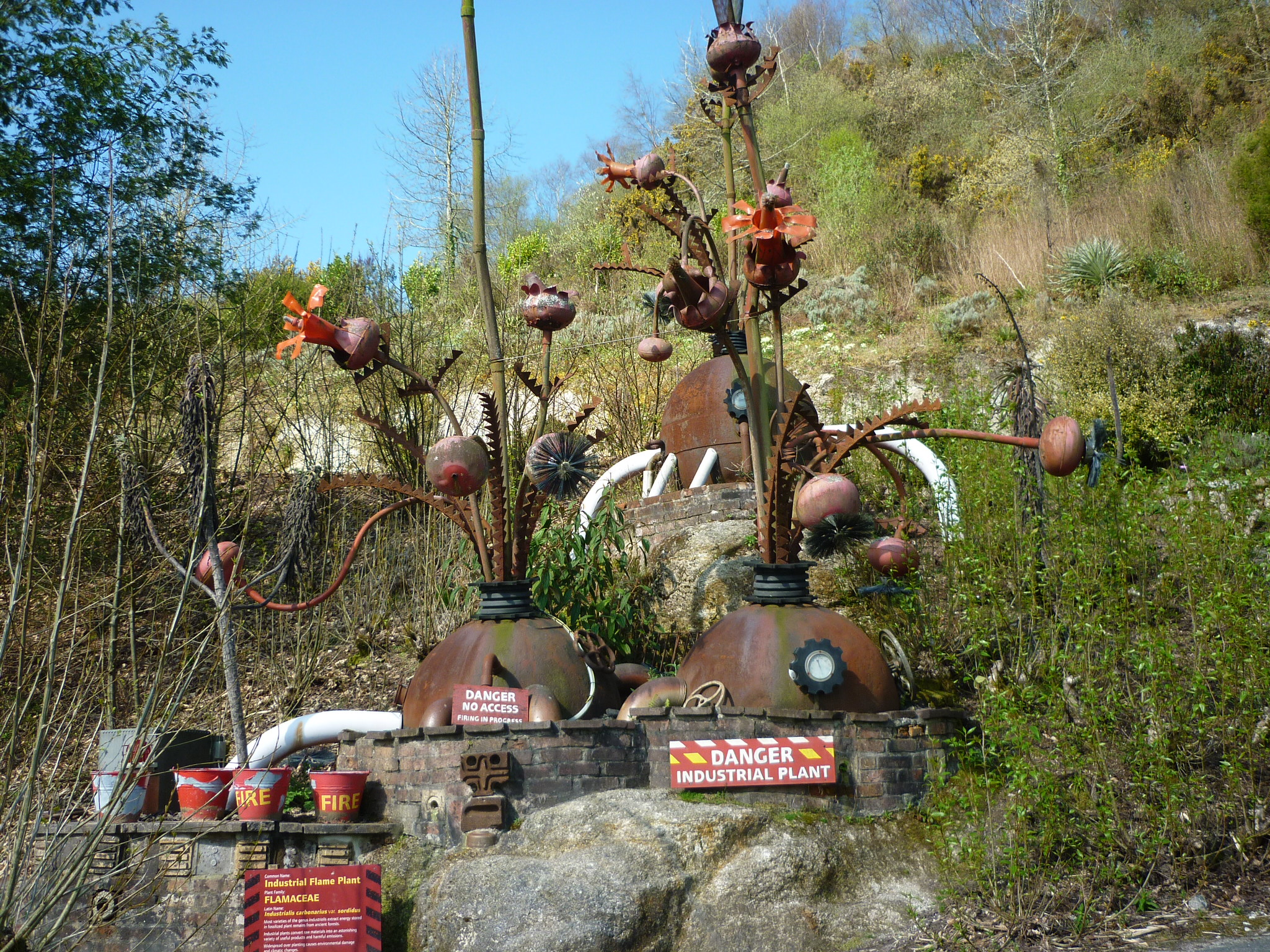
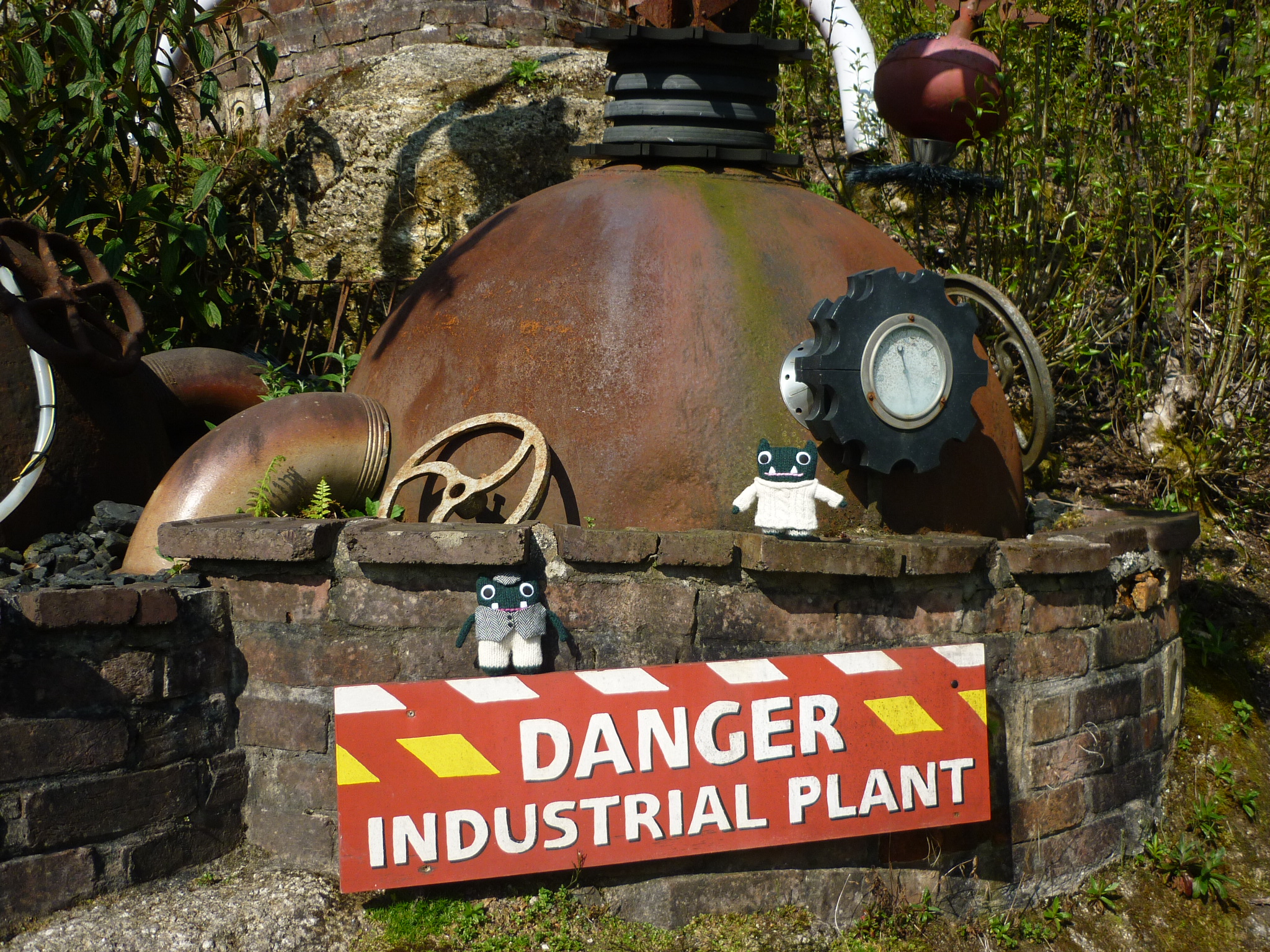
 “Aaaaaah, this must be where they make the charcoal!”
“What do they need charcoal for?”
“For the barbecue, Paddy! They raise beef right here on the estate, and have big summer barbecues for visitors!”
Paddy went quiet.
“If I had known there was going to be a barbecue, Plunkett, I wouldn’t have filled up on pineapple!”
Oh dear. Perhaps a quick stroll around more of the gardens will help Paddy to work up an appetite for a second helping of Heligan’s tasty treats? We’ll have more from the boys on Tuesday… But in the meantime, do feel free to make Paddy jealous by sharing your weekend dining plans with us in the comments!
Have a good one, everybody!





















 Well, not exactly. A fen is an area of marshy ground, and they’re pretty prone to flooding. While many of the fens in this super-flat part of eastern England were drained to create extra farmland in the 17th century, in the Bronze Age these places would have been tricky enough to navigate. Too wet to walk, too shallow for a boat… GAAAAAAAH! What to do?
 … And what Plunkett is looking at in the first photo is only a fraction of what is actually there. The whole causeway is more than a kilometre long, and the platform is the size of Wembley Stadium!
 These bronze finds – mostly weapons – intriguingly show signs of having been deliberately damaged, and their positioning in the silty ground suggests that they were intentionally dropped there, rather than carelessly chucked away because they were broken. This implies that the causeway was a place of ritual significance, as well as (possibly) being a handy way of getting across Flag Fen!
 Meanwhile, Paddy was trying on some wooden beakers for size… Because, well, that’s what Paddy does.
 The lads also rested their weary paws on this rather spectacular chair – we think it might be made of bog oak, preserved timber that has been coloured and hardened by years of sitting in the acidic water of the marshes!
 Unfortunately, Paddy had less success with this replica dugout canoe…
 “Row faster, Plunkett! It feels like we’re not moving at all!
 It’s really been quite a trip!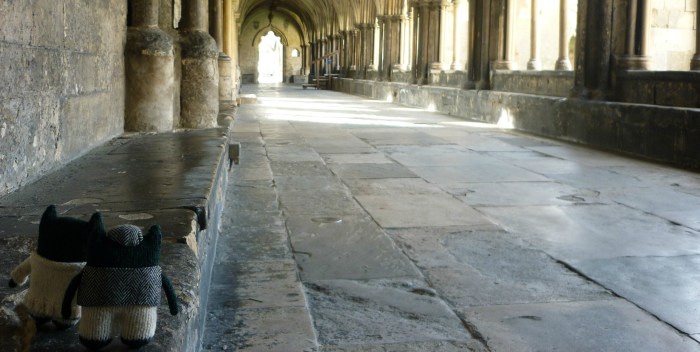
 According to Plunkett’s research, this cathedral is more than 900 years old (construction started in 1096) and boasts the second tallest spire in England – a fitting landmark for a city that, in the 11th century, was second only to London in size and importance. Shall we wander over for a closer look?
 Talk about making an entrance! This is one of two gates into the cathedral grounds. It’s called St Ethelbert’s Gate, and it actually used to contain a chapel to its namesake in its second storey. And although it looks like the real deal, this isn’t the original gate! It’s a 14th century rebuild, after the first one was destroyed in the riot of 1272.
 However, like many visitors, they weren’t able to agree on the new stained glass windows. They were designed by English abstract artist John McLean, and were installed on the north aisle in 2014. Apparently they’ve been causing controversy ever since!
 Paddy loves the rich colours, and the way the bright light bounces around this corridor, which he thought would be pretty dark and boring otherwise. On the other hand, Plunkett really would have preferred to see something more traditional, and in keeping with the rest of the building. Whose side are you on?
 Although there’s little concrete information about her life, Julian of Norwich is still considered an important mystic and theologian. Her account of her religious visions, “Revelations of Divine Love” is thought to be the first book written in English by a female author! She lived out her days in a small cell in a church on this site, and her only contact with the outside world was through two small windows – one into the church, and the other looking onto St Julian’s Alley outside. Members of the public could pass by and ask Mother Julian for advice, and I think it’s fair to presume that she was called upon to settle a few disagreements in her time!
 Fortunately, this beautiful Art Nouveau arcade has enough architectural interest to keep Plunkett entertained too!
 “Not just any old stone wall, my friends! A stone wall made with the hard-wearing local flint! Beautiful! Incredible!”
 I reckon there’s room in all that fancy stonework for a Beastie-shaped addition – what do you think?
 Well, mostly… The Norman-era central tower actually collapsed in 1322. However, Ely Cathedral wasn’t going to let that cramp its style – the tower was rebuilt and then some! What stands there now is the famous Octagon, which you can see in the centre background of this photo.
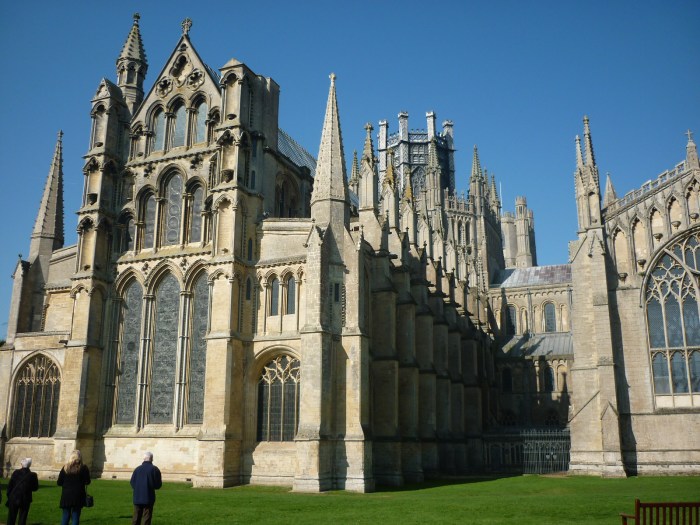 As I’m sure you can imagine, Plunkett couldn’t wait to get inside this place for a closer look! Unfortunately, he really should have checked his diary first…
 … Because it turns out that the lads had rocked up on Palm Sunday! They decided to let the annual procession (complete with full choir and real live donkey!) pass them by, and headed off in search of morning coffee on the banks of the River Ouse instead.
 Paddy certainly wasn’t going to say no to another hour of lounging around in the sunshine!
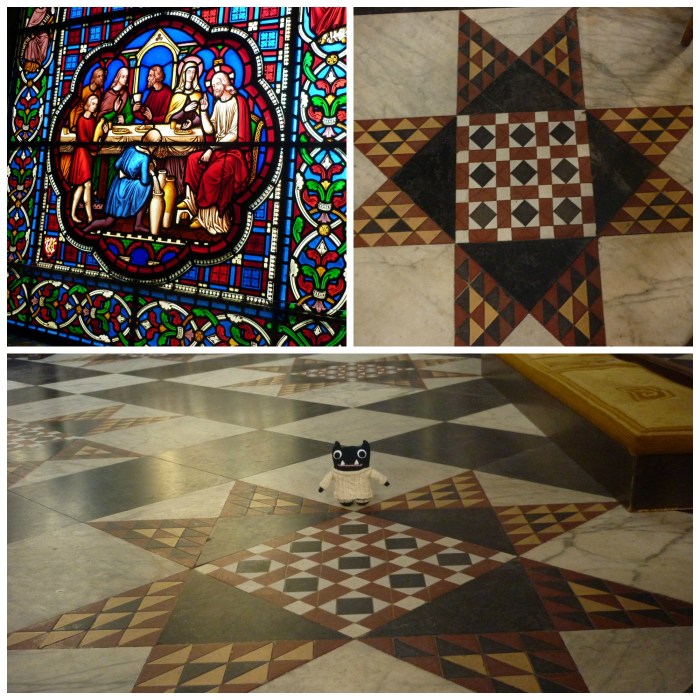
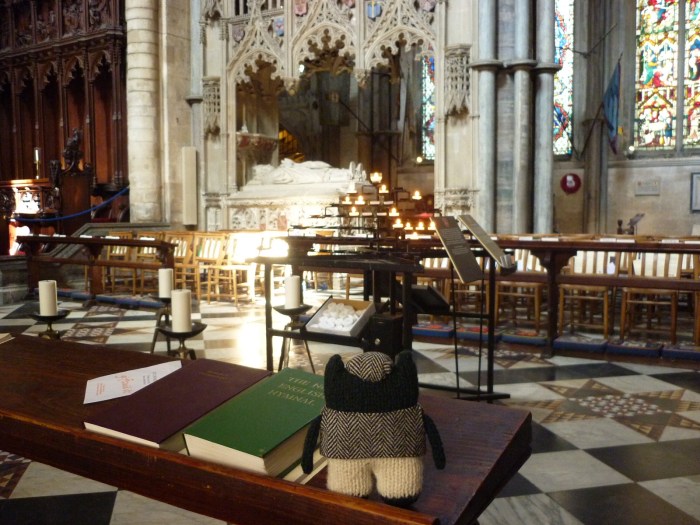 …While Paddy enjoyed the colourful stained glass and mosaic floors!
 And then, there were the beautiful high arches of the Octagon!
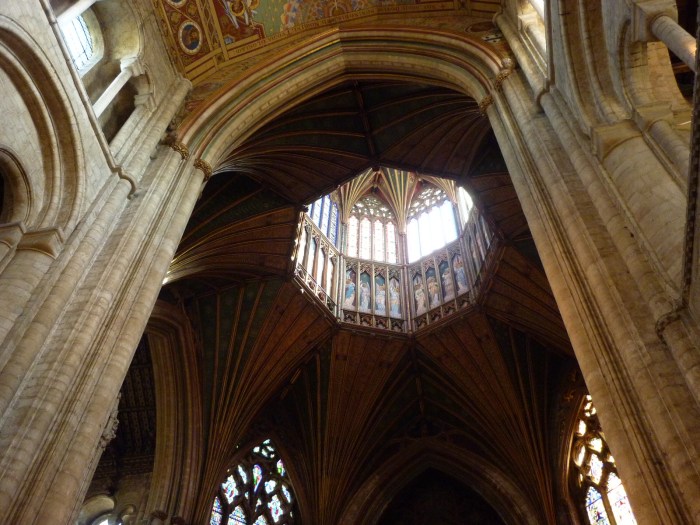 “Paddy, did you know that the roof and lantern in the centre of this tower are held up by timber structures that couldn’t be built now, because there aren’t big enough trees any more?”
 But the view from the top of the West Tower was totally worth the dizzying heights and sore paws!

