The boys are stepping back in time again this week – and a little further than usual, too! Today finds them exploring Flag Fen in Cambridgeshire, which had its heyday 3,300 years ago!
What was this place, a harbour?
 Well, not exactly. A fen is an area of marshy ground, and they’re pretty prone to flooding. While many of the fens in this super-flat part of eastern England were drained to create extra farmland in the 17th century, in the Bronze Age these places would have been tricky enough to navigate. Too wet to walk, too shallow for a boat… GAAAAAAAH! What to do?
Answer – you build a raised walkway over it, and strut across in style without getting your paws wet! And that’s what these timbers are – the remains of a trackway that led to a huge platform out in the fen. It’s kept nice and damp to help to preserve the ancient wood…
 … And what Plunkett is looking at in the first photo is only a fraction of what is actually there. The whole causeway is more than a kilometre long, and the platform is the size of Wembley Stadium!
Building something on this scale, in this location, at that time would have been a huge undertaking – so why is it here? Unfortunately, our Bronze Age friends weren’t much for writing things down, so we can really only speculate (wildly, in Paddy’s case) about what this place was used for. However, the archaeologists who excavated the site back in the 1980s found way more of this kind of thing than they expected…
 These bronze finds – mostly weapons – intriguingly show signs of having been deliberately damaged, and their positioning in the silty ground suggests that they were intentionally dropped there, rather than carelessly chucked away because they were broken. This implies that the causeway was a place of ritual significance, as well as (possibly) being a handy way of getting across Flag Fen!
There’s plenty of opportunity for you to get in touch with your Bronze Age roots around here too… Plunkett took a stroll into this reconstructed roundhouse, built on the site where a real one was excavated!
 Meanwhile, Paddy was trying on some wooden beakers for size… Because, well, that’s what Paddy does.
 The lads also rested their weary paws on this rather spectacular chair – we think it might be made of bog oak, preserved timber that has been coloured and hardened by years of sitting in the acidic water of the marshes!
 Unfortunately, Paddy had less success with this replica dugout canoe…
 “Row faster, Plunkett! It feels like we’re not moving at all!
This is a copy of one of the boats that was unearthed at Must Farm, just down the road. The real ones are still undergoing preservation work and some of them are really enormous!
Now, what’s been missing from this trip so far? That’s right – SHEEP! This visitor centre is home to a herd of lively Soay sheep, the closest living thing to the kind of sheep that you would have seen trotting around here in the Bronze Age.
 While Paddy attempted to make friends with some of those lambs, Plunkett took a moment to enjoy a last look out over the site.
 It’s really been quite a trip!
Paddy and Plunkett will have their paws back on comparatively dry land when they rejoin us in a couple of weeks. And next Tuesday, I hope to have some exciting new BeastieBlog developments to share with you all! See you then!


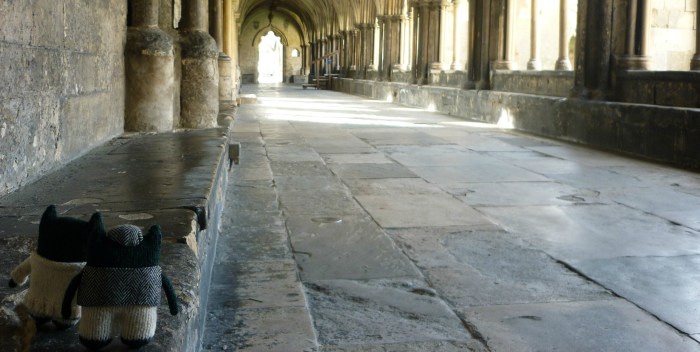
 According to Plunkett’s research, this cathedral is more than 900 years old (construction started in 1096) and boasts the second tallest spire in England – a fitting landmark for a city that, in the 11th century, was second only to London in size and importance. Shall we wander over for a closer look?
 Talk about making an entrance! This is one of two gates into the cathedral grounds. It’s called St Ethelbert’s Gate, and it actually used to contain a chapel to its namesake in its second storey. And although it looks like the real deal, this isn’t the original gate! It’s a 14th century rebuild, after the first one was destroyed in the riot of 1272.
 However, like many visitors, they weren’t able to agree on the new stained glass windows. They were designed by English abstract artist John McLean, and were installed on the north aisle in 2014. Apparently they’ve been causing controversy ever since!
 Paddy loves the rich colours, and the way the bright light bounces around this corridor, which he thought would be pretty dark and boring otherwise. On the other hand, Plunkett really would have preferred to see something more traditional, and in keeping with the rest of the building. Whose side are you on?
 Although there’s little concrete information about her life, Julian of Norwich is still considered an important mystic and theologian. Her account of her religious visions, “Revelations of Divine Love” is thought to be the first book written in English by a female author! She lived out her days in a small cell in a church on this site, and her only contact with the outside world was through two small windows – one into the church, and the other looking onto St Julian’s Alley outside. Members of the public could pass by and ask Mother Julian for advice, and I think it’s fair to presume that she was called upon to settle a few disagreements in her time!
 Fortunately, this beautiful Art Nouveau arcade has enough architectural interest to keep Plunkett entertained too!
 “Not just any old stone wall, my friends! A stone wall made with the hard-wearing local flint! Beautiful! Incredible!”
 I reckon there’s room in all that fancy stonework for a Beastie-shaped addition – what do you think?
 Well, mostly… The Norman-era central tower actually collapsed in 1322. However, Ely Cathedral wasn’t going to let that cramp its style – the tower was rebuilt and then some! What stands there now is the famous Octagon, which you can see in the centre background of this photo.
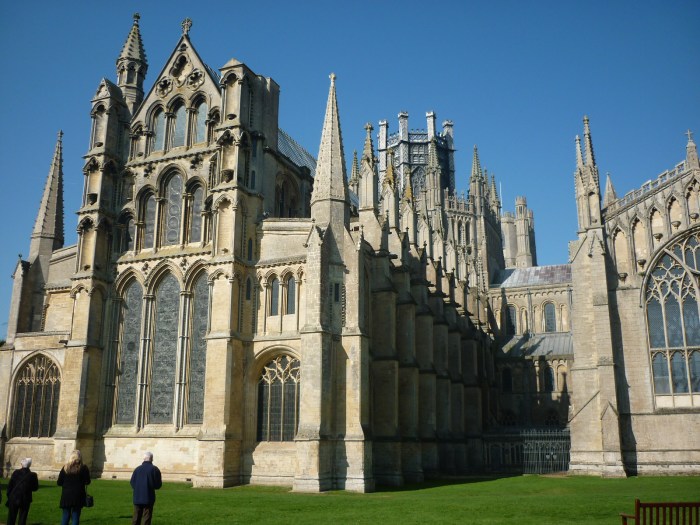 As I’m sure you can imagine, Plunkett couldn’t wait to get inside this place for a closer look! Unfortunately, he really should have checked his diary first…
 … Because it turns out that the lads had rocked up on Palm Sunday! They decided to let the annual procession (complete with full choir and real live donkey!) pass them by, and headed off in search of morning coffee on the banks of the River Ouse instead.
 Paddy certainly wasn’t going to say no to another hour of lounging around in the sunshine!
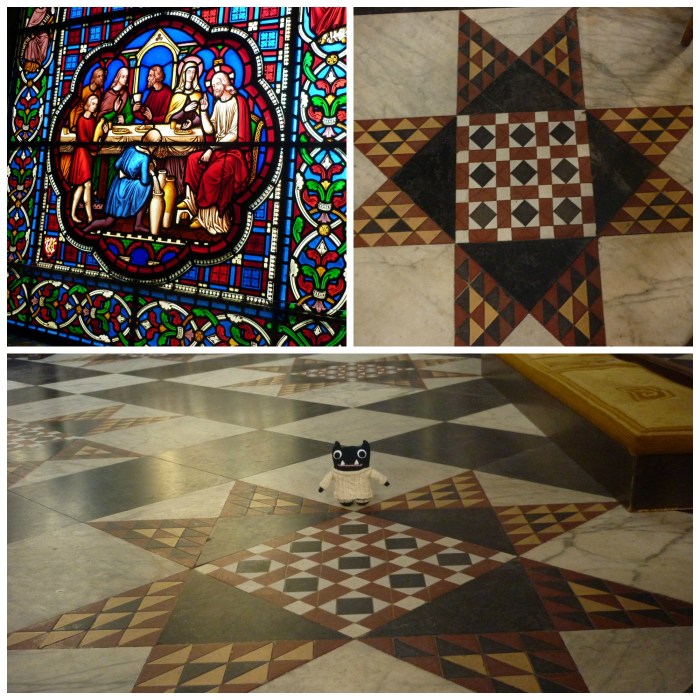
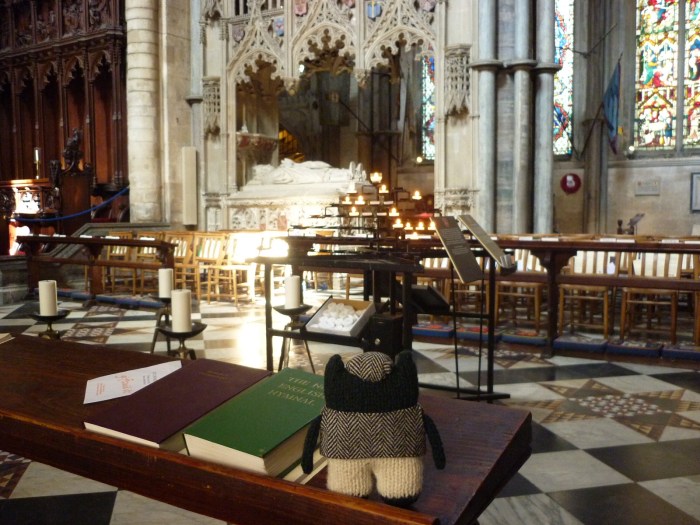 …While Paddy enjoyed the colourful stained glass and mosaic floors!
 And then, there were the beautiful high arches of the Octagon!
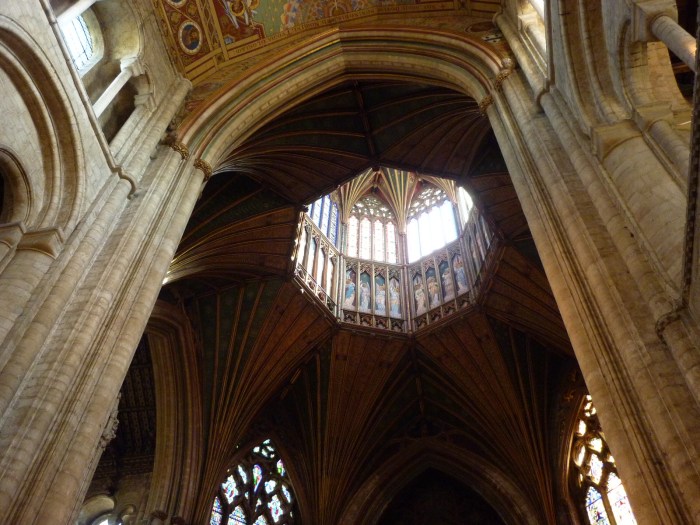 “Paddy, did you know that the roof and lantern in the centre of this tower are held up by timber structures that couldn’t be built now, because there aren’t big enough trees any more?”
 But the view from the top of the West Tower was totally worth the dizzying heights and sore paws!




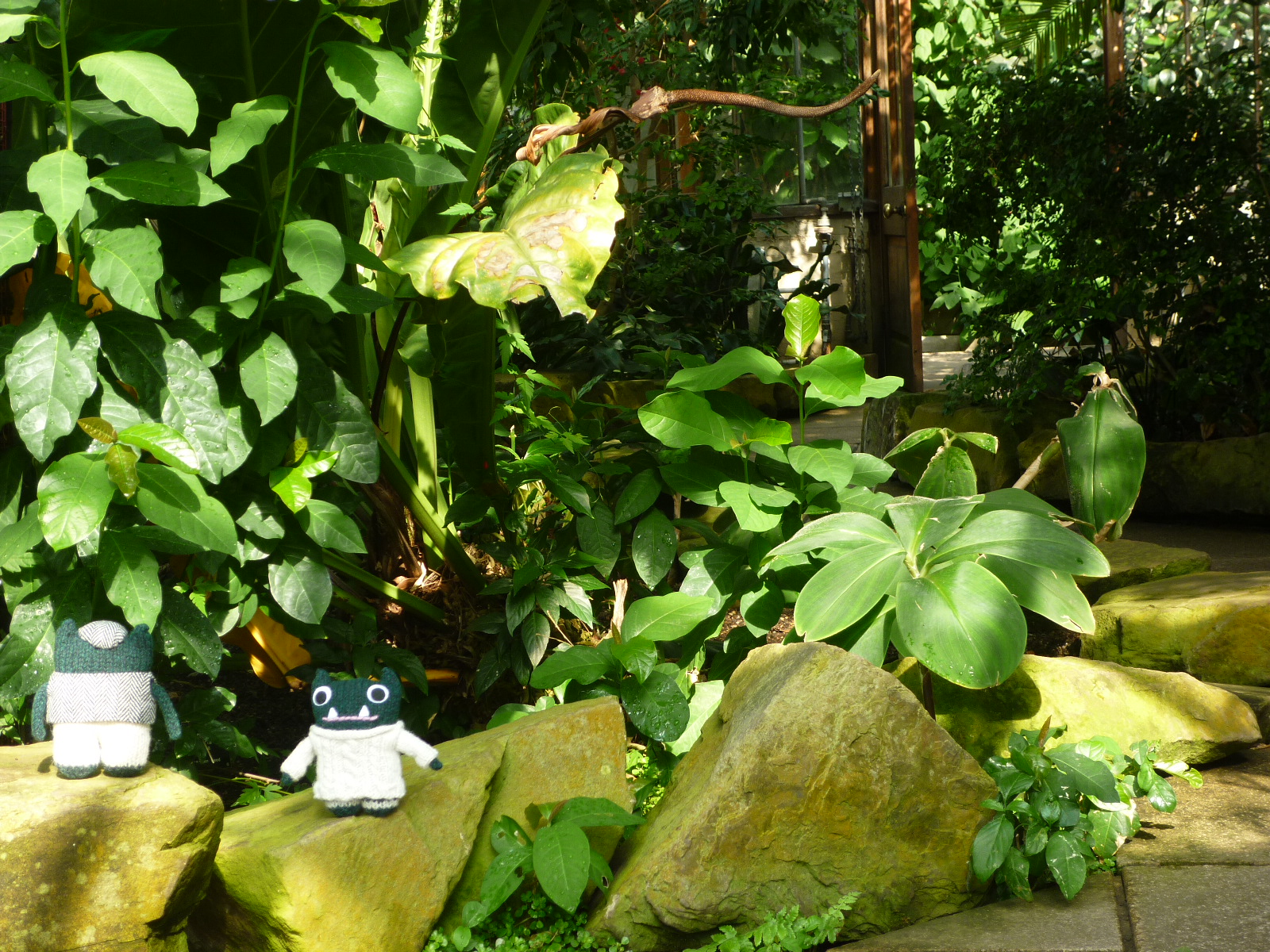


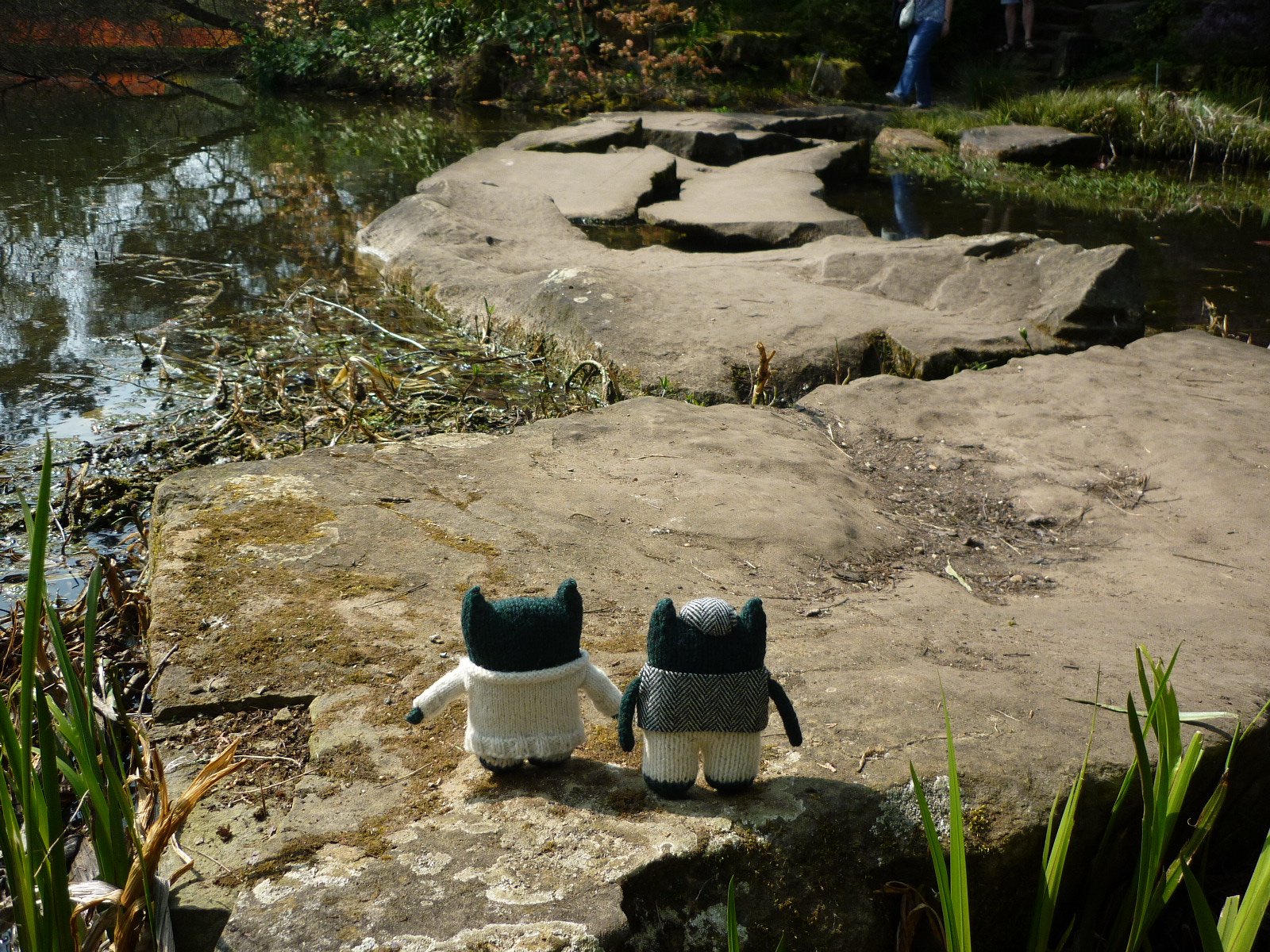
 … Just in time to take the stepping stone path across the bog garden’s lake!