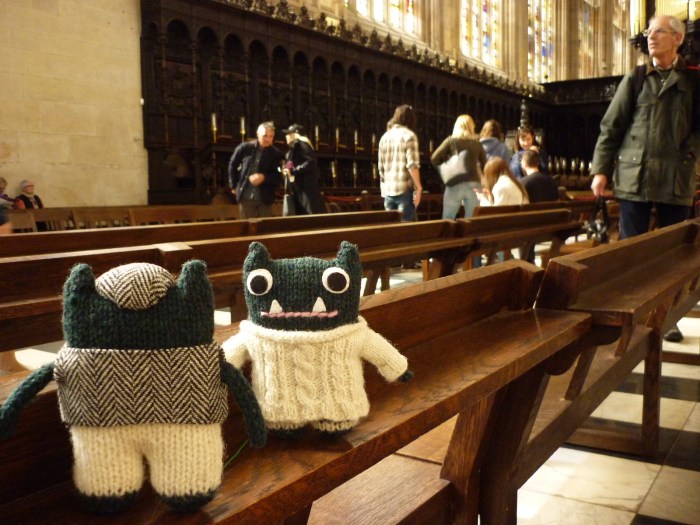
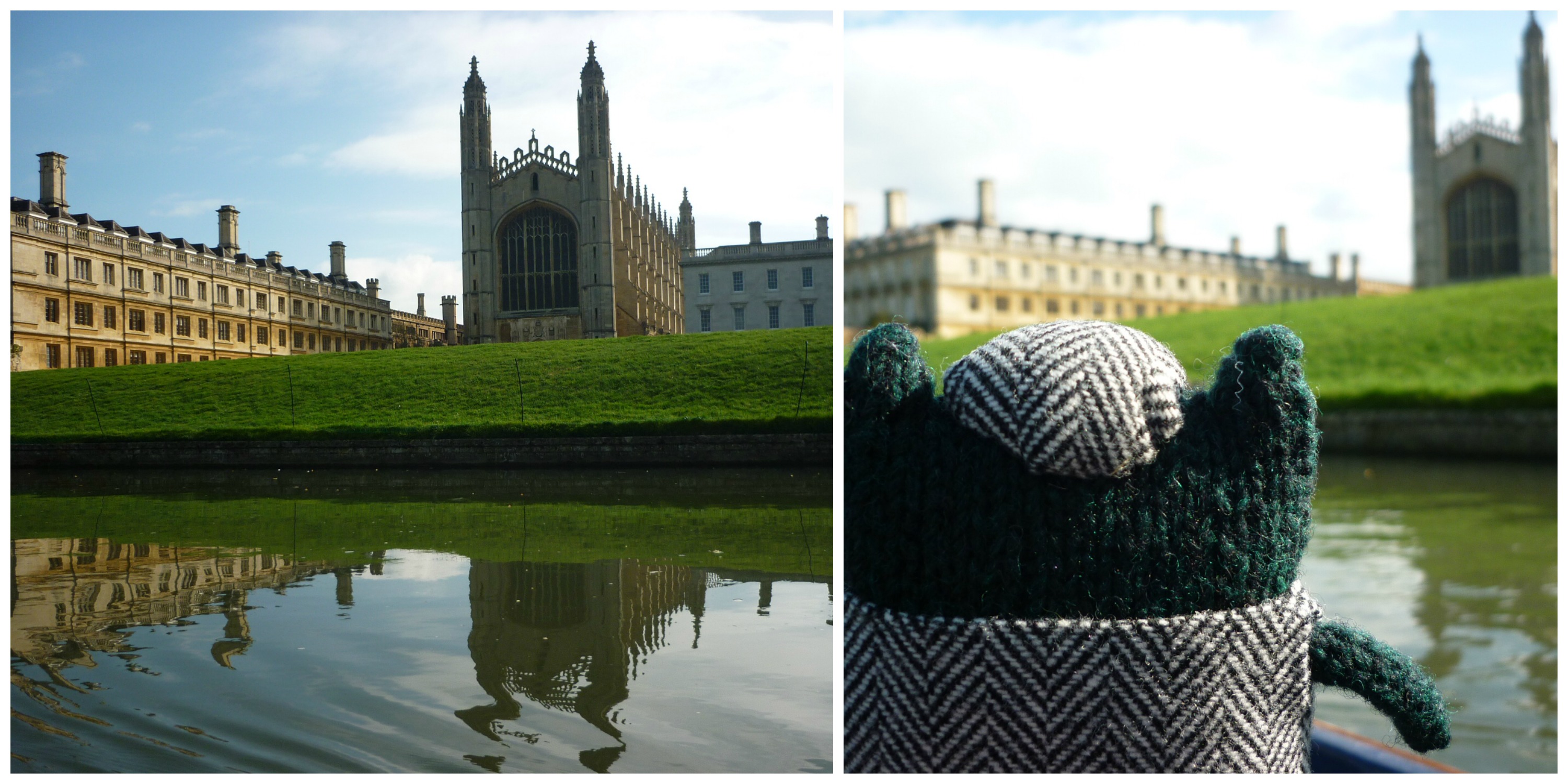
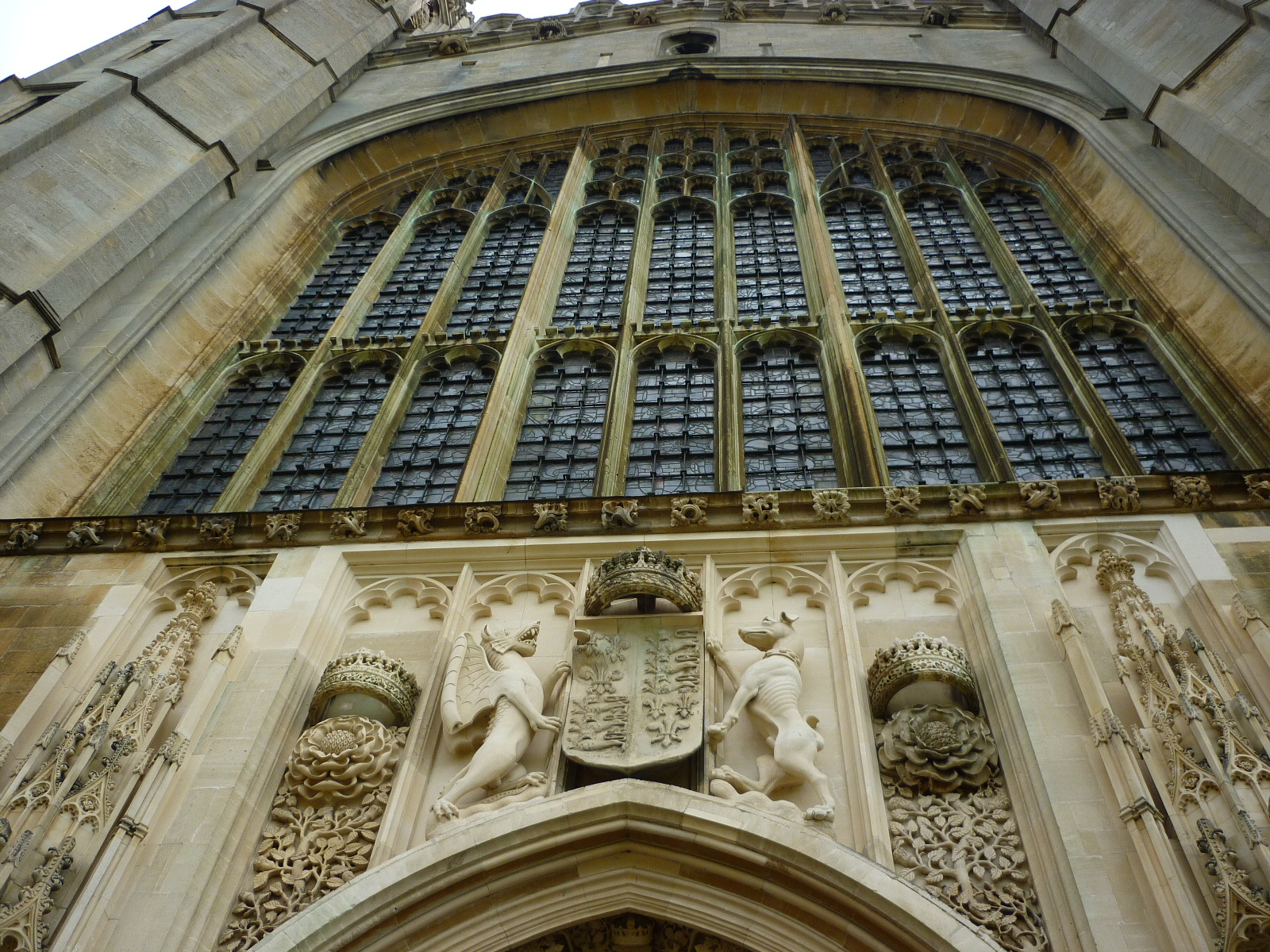
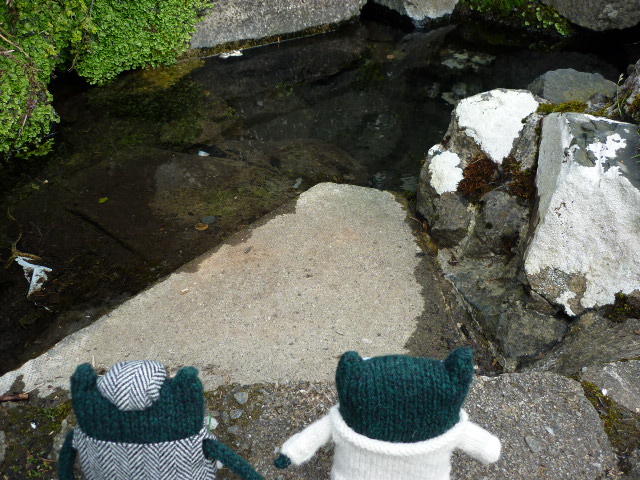
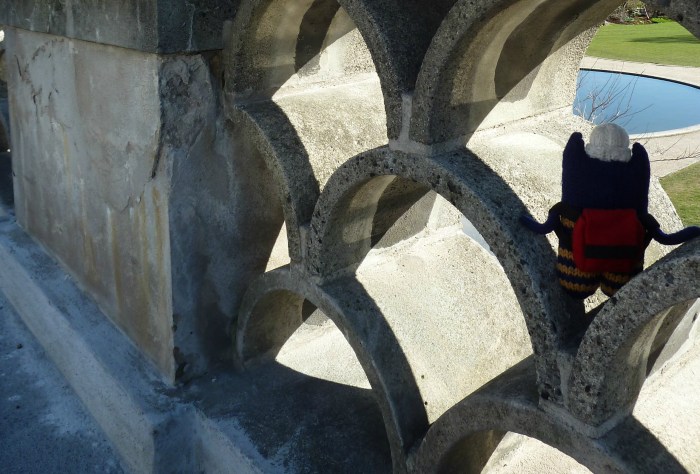
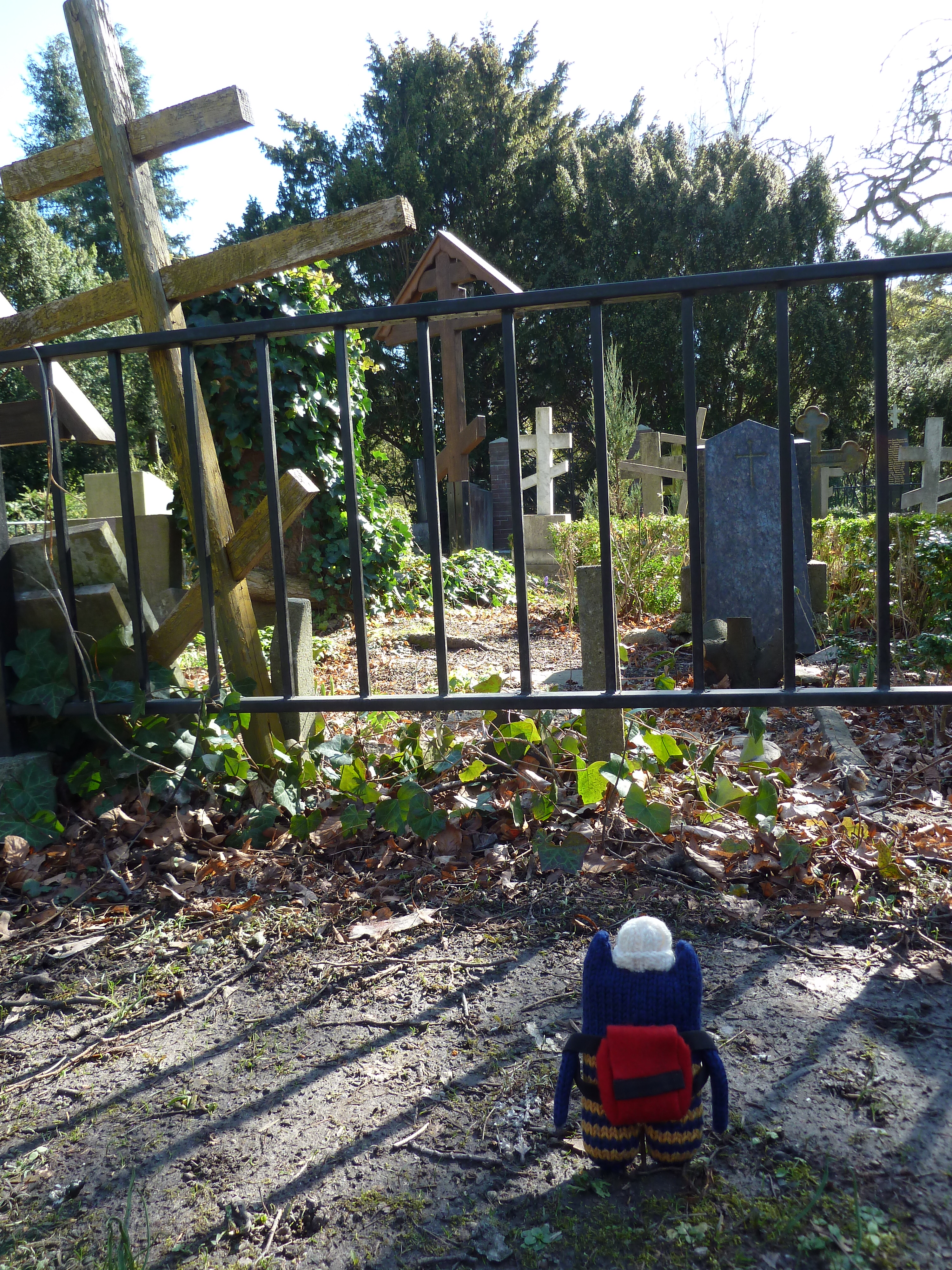
With all the talk Stateside about the total solar eclipse yesterday, Paddy and Plunkett just had to get a slice of the astronomical action for themselves! So they very kindly sent me on some pictures of themselves gadding around in this incredible and unearthly place – welcome to the Crawick Multiverse!

This unique attraction is really a large-scale art installation. Work here started in 2012, and the park opened in 2015. But the best part is that this project has given new life to an area that had been made unfarmable (and also just plain ugly) by years of open-cast coal mining. You wouldn’t think that to look at it now, would you?
 The hills are probably the most striking feature in the park, and I’m sure they can be seen for miles around! These 20 metre tall earth mounds represent the spiral galaxies of Andromeda and our own galactic home, the Milky Way. Did you know that while most of the other 100 billion-odd galaxies in the universe are moving away from us, Andromeda is actually heading right in our direction? The two galaxies are expected to meet in 4 billion years’ time, and this is an interpretation of what will happen next – they’ll whirl around together, stripping lines of stars and planets from each other in a sort of crazy spinning dance. I’m pretty glad I won’t be around to see THAT!
Of course, the boys were just dying to get in to have a closer look at everything… And despite the huge scale of the place, a few helpful “lifts” from passers by (whether they knew it or not) allowed them to mostly hop from place to place in style! First port of call – the Multiverse installation! Well, almost…

“Come on, Plunkett! We’re nearly there! It’s just up here on the hill behind me!”
The “Multiverse” is made of blocks of back and white layered mudstone, arranged in a corkscrew shape (which might be tricky to make out from this angle). It represents all the possible universes, and features carvings showing their different fates.
Well, apparently it does. Unfortunately, Plunkett ran out of puff halfway up the hill, and Paddy got distracted by the idea of the Omphalos, down at the bottom of the slope.
 “Paddy, are you sure about this? Omphalos stones mark the mythical ‘navel of the world’… Who knows WHAT’S potentially lurking in there?”
“Only one way to find out, Plunkett!”

Uh-oh! It’s Plunkett’s turn to get distracted! He’s found some thought-provoking poetry to look at…
 …And check this out – a whole galaxy trapped in a rock!
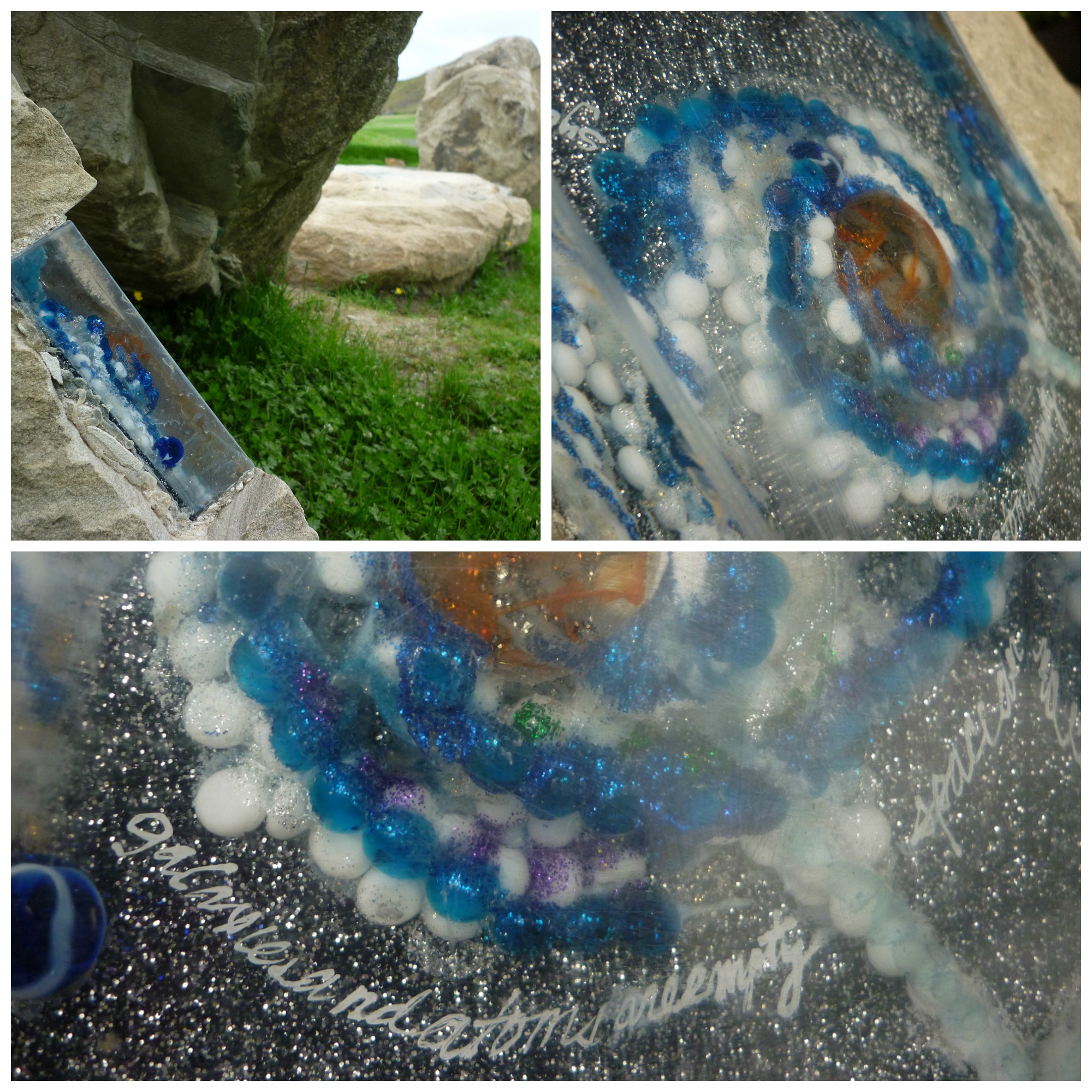
Fortunately, it didn’t take Paddy too long to figure out that he was small enough to squeeze back out through those bars, so the boys were able to meet up again and stroll down the impressive North-South Line, which neatly divides the Multiverse site down the middle.
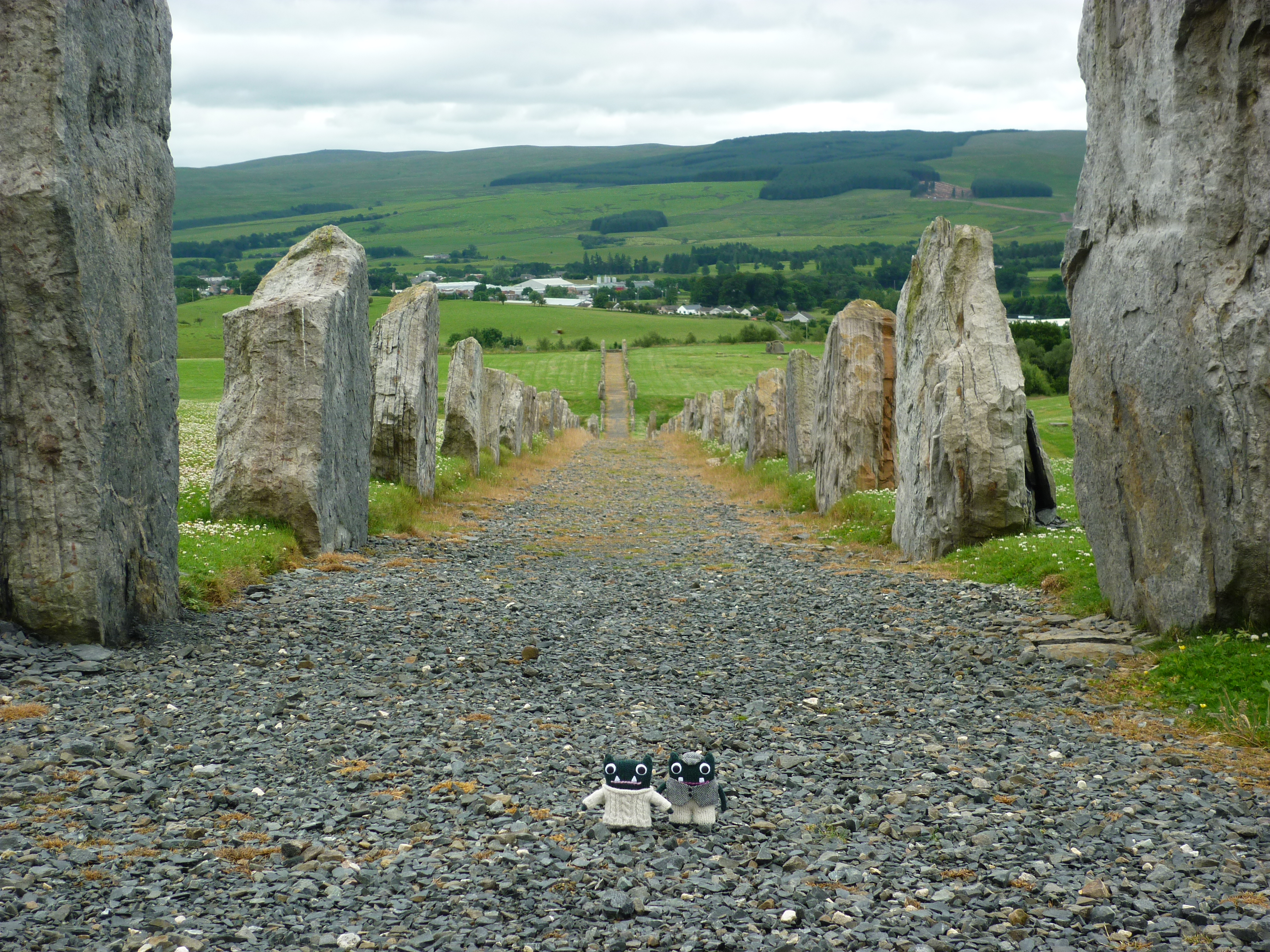
As well as making this walkway extra striking, the boulders lining the path protect walkers from the elements, and (most importantly) provide a playground for mischievous Beasties!
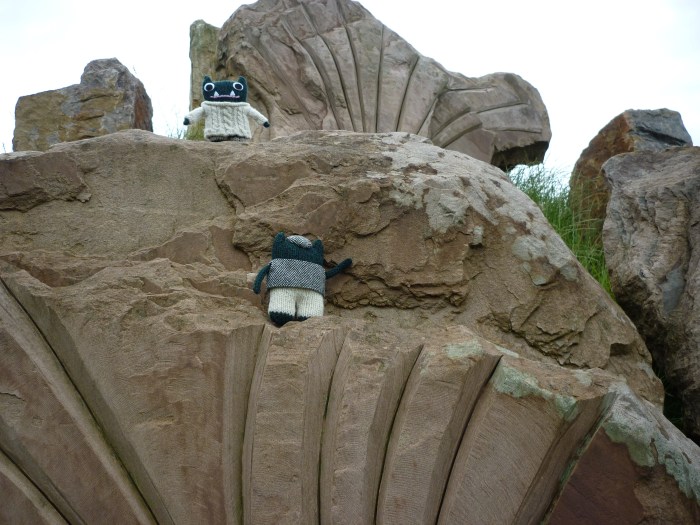 “Plunkett, I think there’s one more place we need to go…”
 “ANOTHER hill?”
“Don’t worry, it’ll TOTALLY be worth it!”
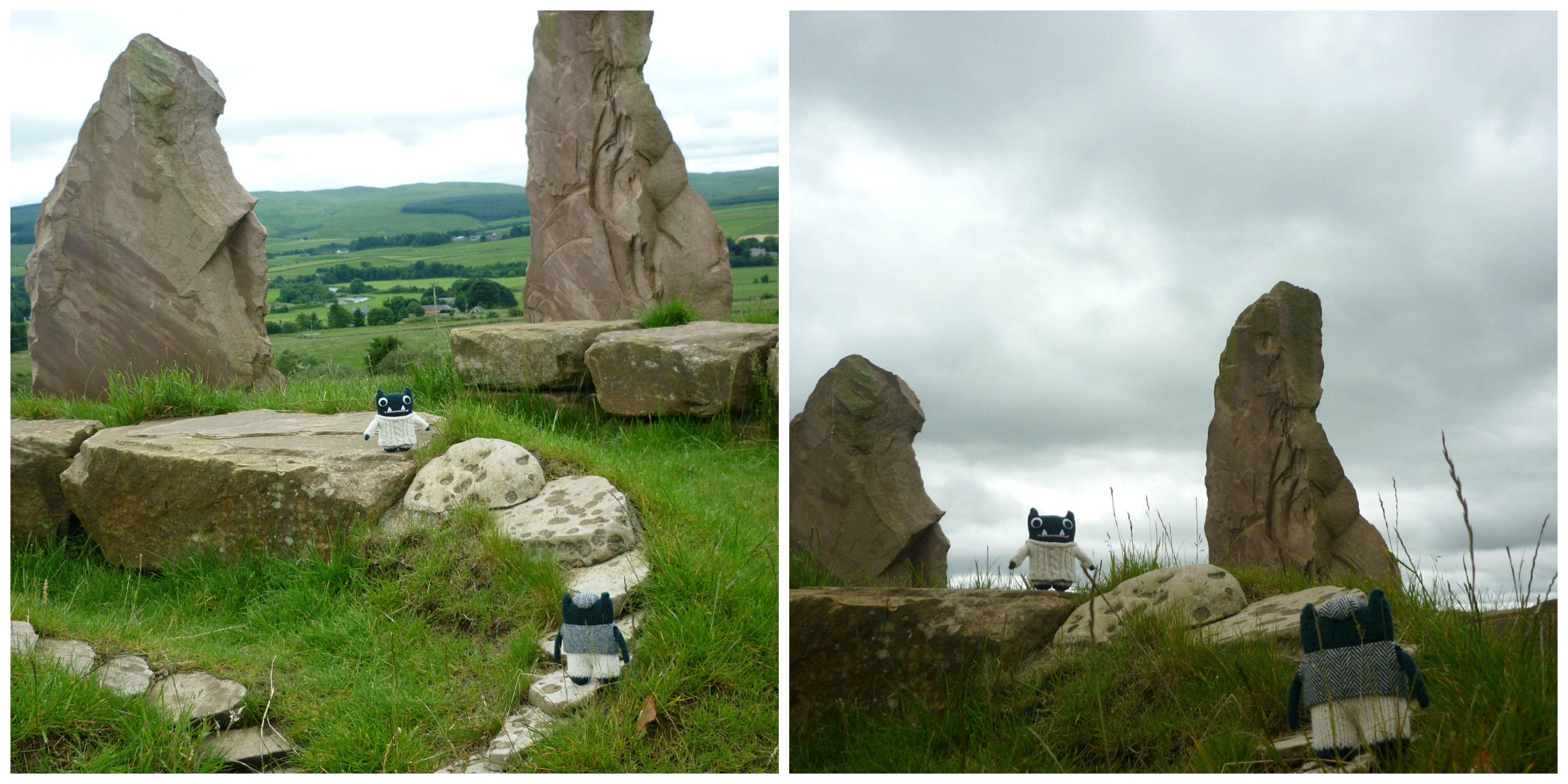
“Come on Plunkett, you can do it!”
 “Not bad, Paddy. Not bad at all!
“Yup. And check it out – this is how the Milky Way looks from Andromeda! You don’t see that every day!”
This pair of monster space cadets will be back in a couple of weeks – unless they decide to spend a little more time exploring the Multiverse!
And what about you? How’s your week been? Did any of you get to see the eclipse? Let us know in the comments!





 See you again soon, lads!

 Well, not exactly. A fen is an area of marshy ground, and they’re pretty prone to flooding. While many of the fens in this super-flat part of eastern England were drained to create extra farmland in the 17th century, in the Bronze Age these places would have been tricky enough to navigate. Too wet to walk, too shallow for a boat… GAAAAAAAH! What to do?
 … And what Plunkett is looking at in the first photo is only a fraction of what is actually there. The whole causeway is more than a kilometre long, and the platform is the size of Wembley Stadium!
 These bronze finds – mostly weapons – intriguingly show signs of having been deliberately damaged, and their positioning in the silty ground suggests that they were intentionally dropped there, rather than carelessly chucked away because they were broken. This implies that the causeway was a place of ritual significance, as well as (possibly) being a handy way of getting across Flag Fen!
 Meanwhile, Paddy was trying on some wooden beakers for size… Because, well, that’s what Paddy does.
 The lads also rested their weary paws on this rather spectacular chair – we think it might be made of bog oak, preserved timber that has been coloured and hardened by years of sitting in the acidic water of the marshes!
 Unfortunately, Paddy had less success with this replica dugout canoe…
 “Row faster, Plunkett! It feels like we’re not moving at all!
 It’s really been quite a trip!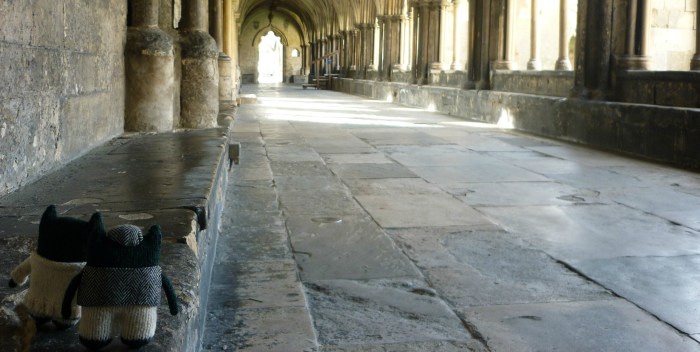
 According to Plunkett’s research, this cathedral is more than 900 years old (construction started in 1096) and boasts the second tallest spire in England – a fitting landmark for a city that, in the 11th century, was second only to London in size and importance. Shall we wander over for a closer look?
 Talk about making an entrance! This is one of two gates into the cathedral grounds. It’s called St Ethelbert’s Gate, and it actually used to contain a chapel to its namesake in its second storey. And although it looks like the real deal, this isn’t the original gate! It’s a 14th century rebuild, after the first one was destroyed in the riot of 1272.
 However, like many visitors, they weren’t able to agree on the new stained glass windows. They were designed by English abstract artist John McLean, and were installed on the north aisle in 2014. Apparently they’ve been causing controversy ever since!
 Paddy loves the rich colours, and the way the bright light bounces around this corridor, which he thought would be pretty dark and boring otherwise. On the other hand, Plunkett really would have preferred to see something more traditional, and in keeping with the rest of the building. Whose side are you on?
 Although there’s little concrete information about her life, Julian of Norwich is still considered an important mystic and theologian. Her account of her religious visions, “Revelations of Divine Love” is thought to be the first book written in English by a female author! She lived out her days in a small cell in a church on this site, and her only contact with the outside world was through two small windows – one into the church, and the other looking onto St Julian’s Alley outside. Members of the public could pass by and ask Mother Julian for advice, and I think it’s fair to presume that she was called upon to settle a few disagreements in her time!
 Fortunately, this beautiful Art Nouveau arcade has enough architectural interest to keep Plunkett entertained too!
 “Not just any old stone wall, my friends! A stone wall made with the hard-wearing local flint! Beautiful! Incredible!”
 I reckon there’s room in all that fancy stonework for a Beastie-shaped addition – what do you think?