A few months ago, I had a bit of a woolly wobble. My local yarn store has stopped stocking the merino wool yarn I use to make my original Beasties, and although I still have a healthy stockpile of most of the colours, the boxes holding my favourite shades are starting to look a little on the empty side. Wanting to keep ahead of the game, I started to scout around for some new yarny options.
Unfortunately, my exacting specifications for Beastie yarns were working against me. Many of the natural fibre yarns I looked at were too lightweight (I suppose the real demand is for the finer yarns used to make shawls and socks), too arty (a painted yarn, however lovely, makes for one sickly-looking Beastie) or were prohibitively expensive. Ever helpful, my yarn supplier suggested I take a look at a new line she had recently started carrying – mostly wool, but with a little acrylic mixed in. So little, she said, that she didn’t notice it was there when she test-knitted a sample. And she hates working with synthetics! It was the right weight, a good price, and they had some super colours. So, why was I hesitating? I mean, surely most people won’t care one way or the other, right?
Well, here’s the thing – I would know. And I care. And today, I thought I’d explain why. Especially since concerns about plastics and synthetic fibres have been playing on my mind more than usual this past week, after I saw this:
//platform.instagram.com/en_US/embeds.js
What’s the connection between a discarded cotton bud and synthetic fibres, you ask? Well, this picture shows the impact of the plastic waste that we can see going into the ocean – there’s something really unsettling about this image, isn’t there? But recent research indicates that plastics are finding their way into the seas, and their food chains, through a less obvious route… as tiny fibres that are shed any time synthetic materials are laundered. Weestorybook wrote about the problems associated with synthetic yarns back in the summer, and her post links to several other articles on the subject which are really worth checking out. I’d especially recommend the Guardian’s feature about Mark Browne, an ecologist who is currently trying to raise awareness about these issues, and encourage research into viable, low-impact alternatives.
So, score one point for wool – any sheddings from this natural fibre are totally biodegradable! That should keep Mermaid Beastie and her underwater friends happy.
 Next, how about we take a look at where these fibres come from? Now, I know that farming is hardly a squeaky-clean, environmentally-friendly enterprise. I realise that sheep are prone to all manner of parasites and diseases, and that the chemicals required to prevent against these nasties taking hold are probably pretty nasty themselves. But let’s not forget that synthetic fibres are extracted from crude oil, and held up against the oil extraction and processing industry, even the most intensive sheep farming comes out looking pretty angelic.
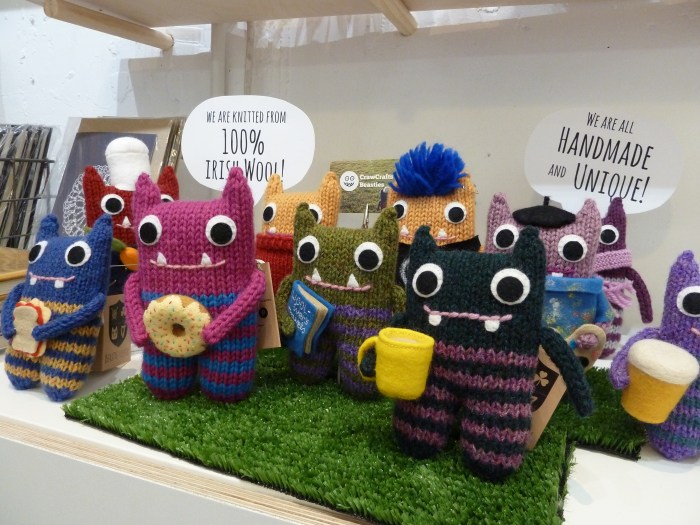
From a more personal perspective, Ireland doesn’t have any natural oil reserves – but we can (and do) farm sheep here! This country has a long tradition of cultivating, processing and using wool, so by making use of this resource, rather than one which will always have to be brought in from somewhere else, I like to feel that I’m helping to keep that industry alive. That’s why I started using Irish wool to make Barróg Beasties, like these guys here!

Add to that the fact that world oil supplies are running low, and renewable wool starts looking pretty good!
And leading on from that… Wow, wool has so much history! It’s estimated that we’ve been cultivating sheep and wearing wool for the last 10,000 years – that’s not the kind of relationship you can just turn your back on! You can find a handy potted history of our involvement with this wonderful fibre here. I also recently stumbled across this video, which really brought home to me how essential wool has been to humans for such a long time, and the respect our ancestors had for the production of their woollen garments. This is a million miles from the disposable fast fashion we’ve become so used to!
There’s something fascinating to me about continuing to use such an ancient material in much the same way as it’s been worked for centuries, and at the same time creating something that’s truly my own!
And finally… well, I just like it! For me, it’s the most pleasant fibre to work with. I enjoy the springy feel of the yarn as I knit, and the texture of the fabric I make from it. I like that it doesn’t squeak against my favourite metal knitting needles. I love it when I come across pieces of grass or straw tangled in among the spun fibres, reminding me that this stuff came from an animal, rather than a barrel. And I like to think that the Beasties carry a little bit of this joy with them when they head off into the world.

How about you? What’s the story behind your favourite fibres? Let us all know in the comments!
Aaaaand we’ll be back next week, with a new Paddy and Plunkett adventure… See you then!
 Explorer Beastie was tempted to freewheel down twisty Fishamble Street on this greenery-bedecked bicycle, but fortunately I was able to talk him out of it. Let’s just walk the rest of the way, perhaps?
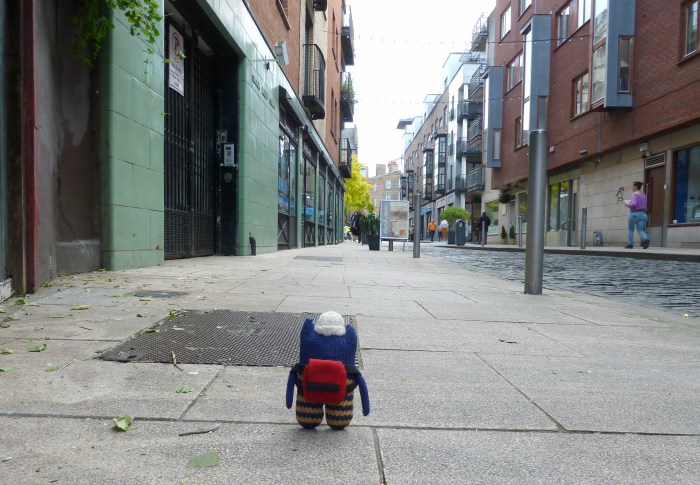 And sure enough, it wasn’t long before we found ourselves in the narrow cobbled streets of Temple Bar!
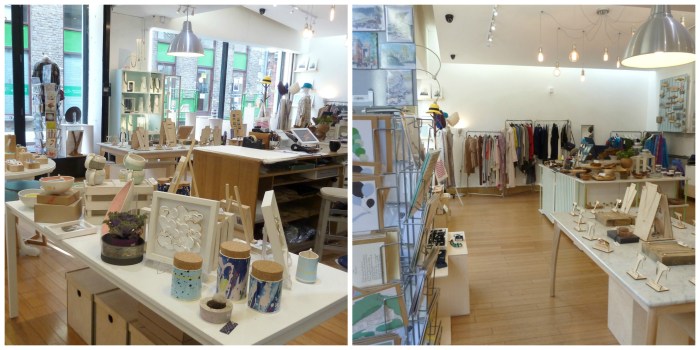 And look… There they are!
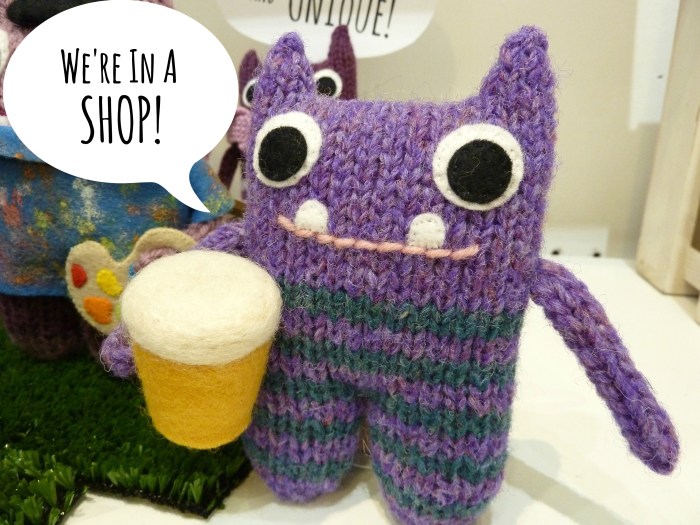
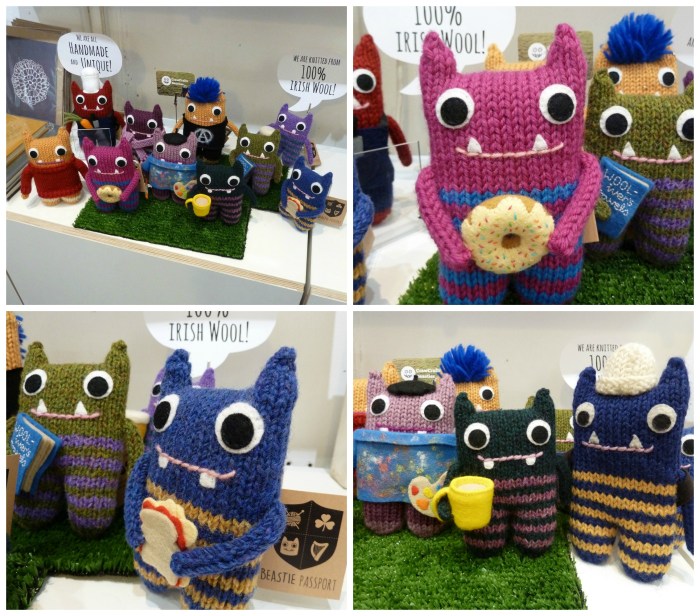 The Beasties will be guests at Cow’s Lane Designer Studio for at least the next month, so if you’re in the area, please do pop in and say hello! All of them are eager to meet you, and maybe find their forever home!
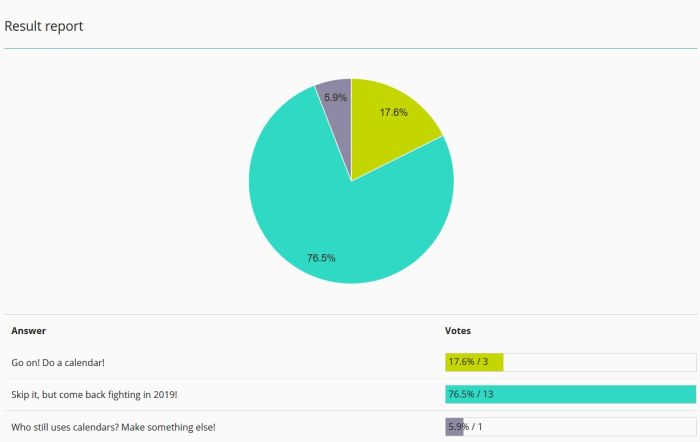 Ta-daaaaah! The people have spoken, and they’ve come out in favour of a calendar gap year. Although I reckon I’ll really have to deliver on my promise to get something bigger, brighter and better together for 2019! It’s also interesting that the idea of abandoning the calendar altogether was the least popular option – I’ve been happy to discover that I’m not the last person on earth who depends one of these primitive devices to stop my world from descending into chaos!


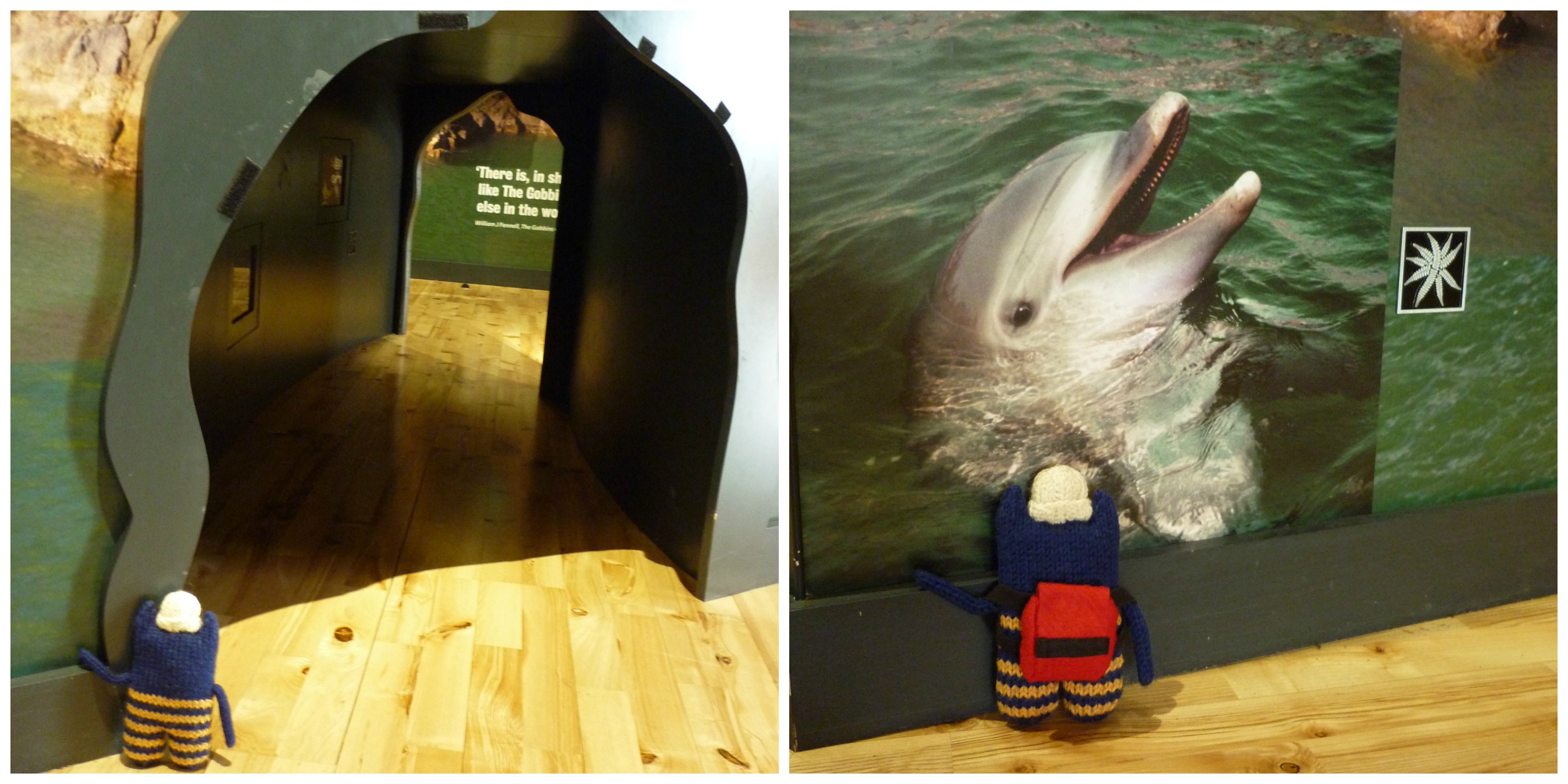
 Good spooky picture, too! So, it wasn’t long before Explorer Beastie was back to his usual carefree self.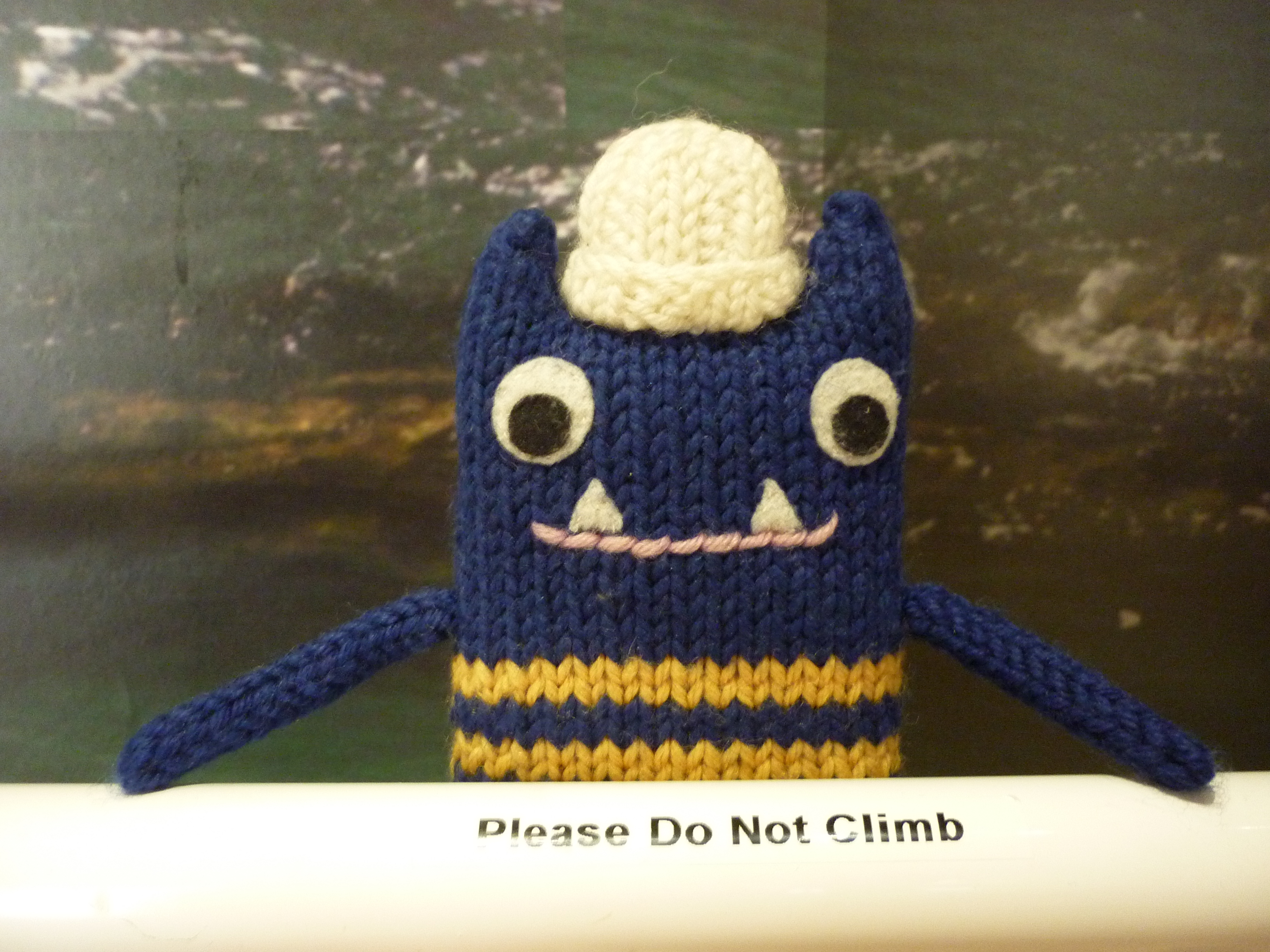

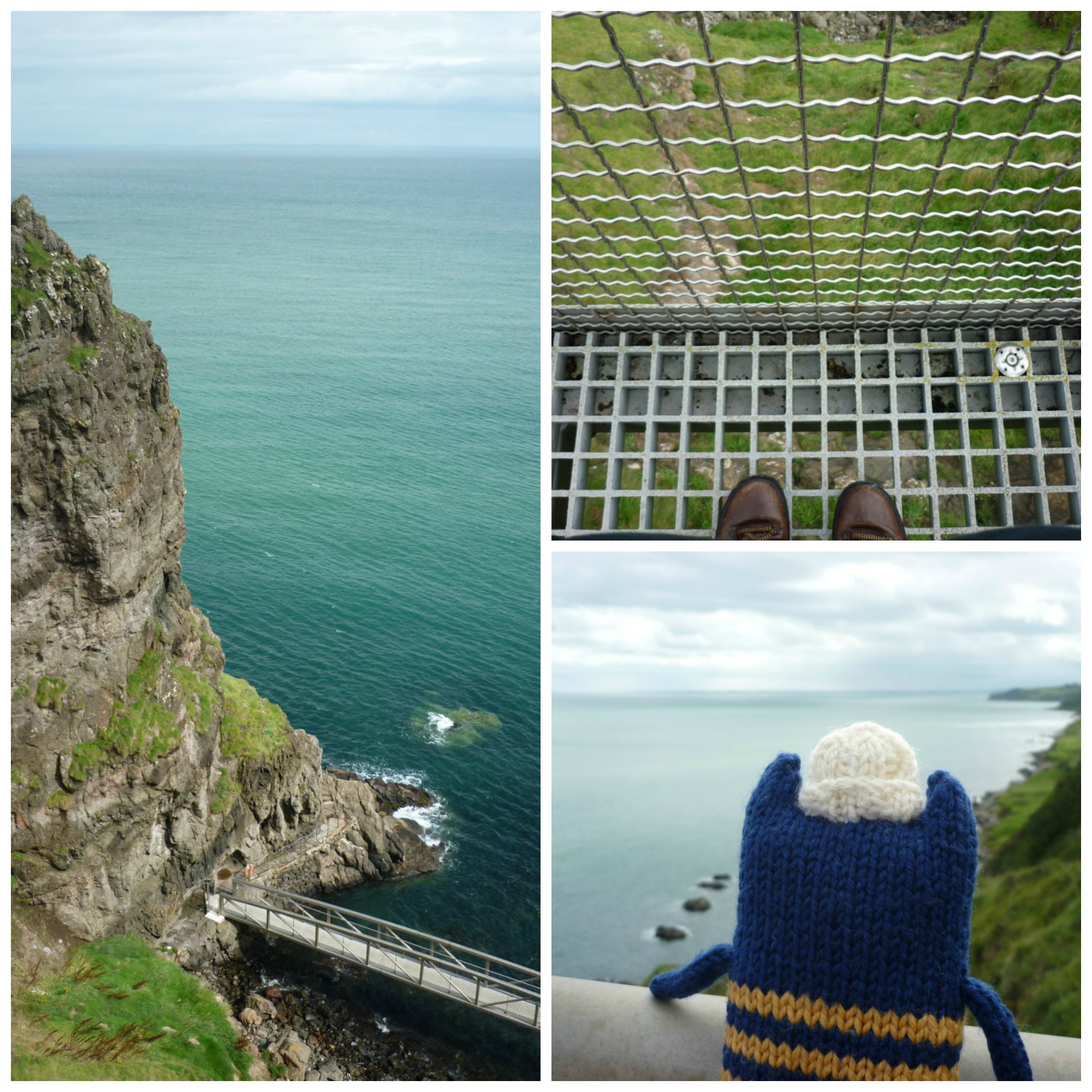


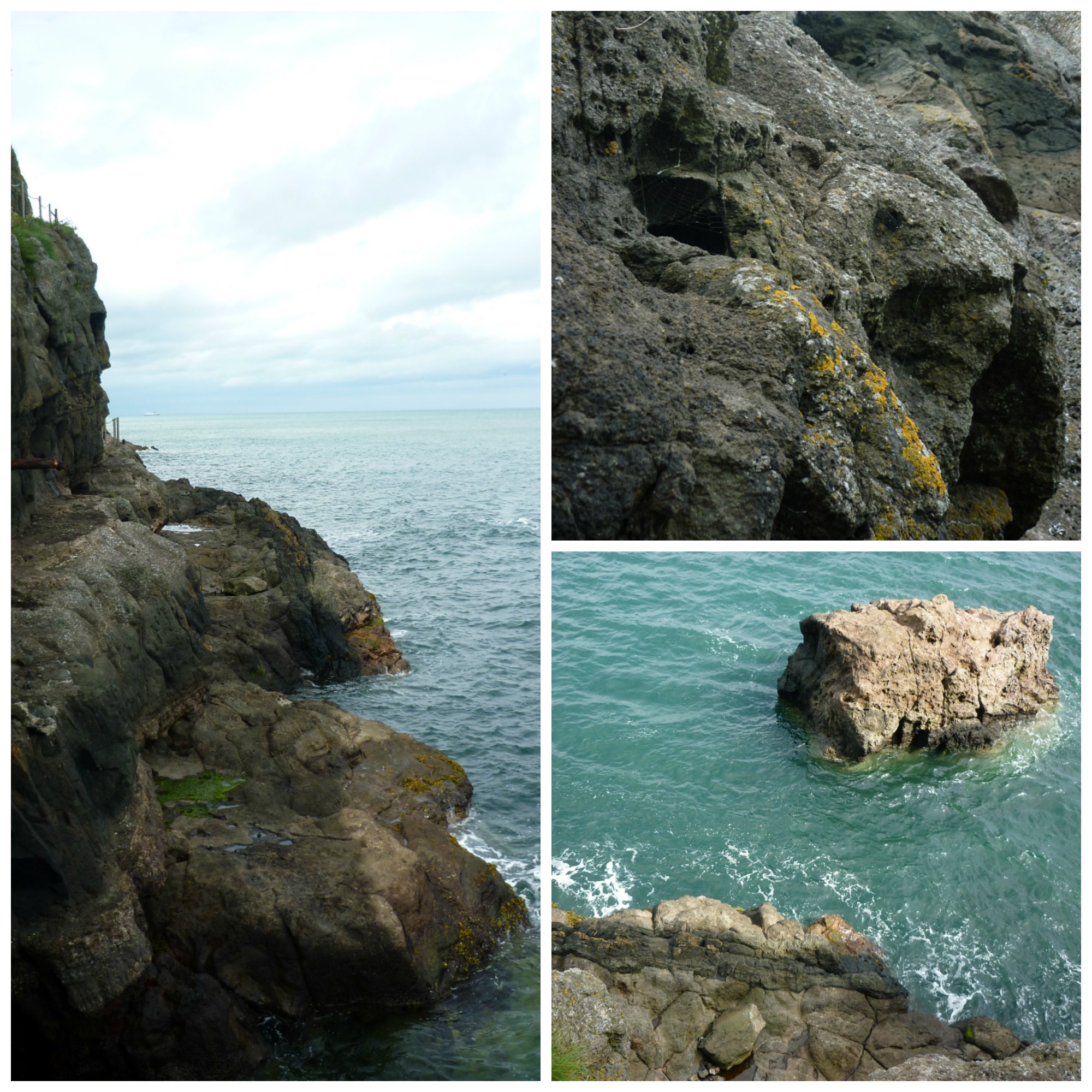
 And what’s Explorer Beastie looking at so intensely in the second picture? Well, he’s trying to find Gobbinsite, a mineral that was discovered right here in this very area. Deposits have subsquently popped up all over the globe, but it still retains the name of the place where it was seen first. What someone should probably tell Explorer Beastie is that Gobbinsite is one of a group of minerals that all look very similar, and can only be differentiated by looking at the crystals under a microscope… But the promise of poking around some Beastie-sized caves should probably distract him nicely from that small technicality!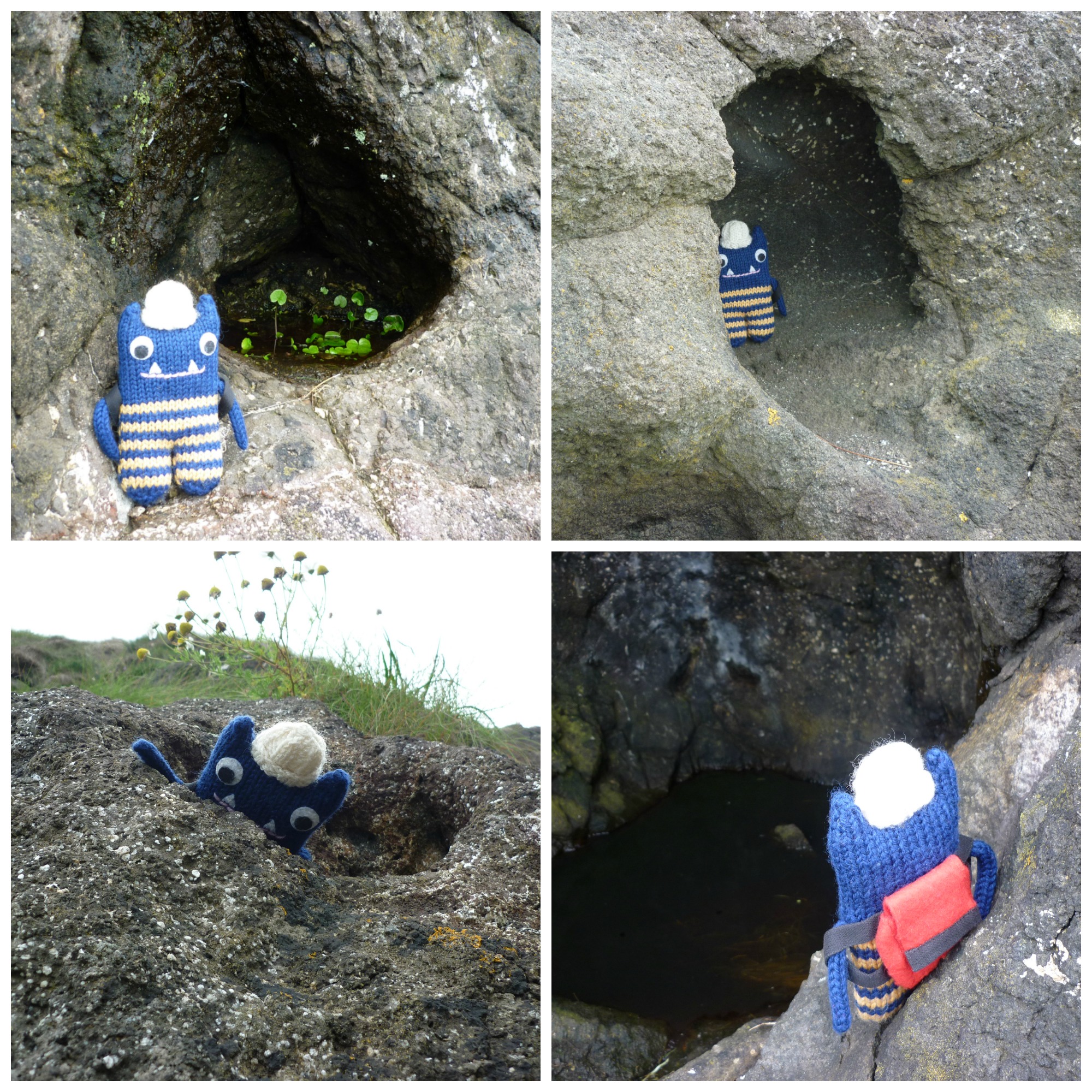
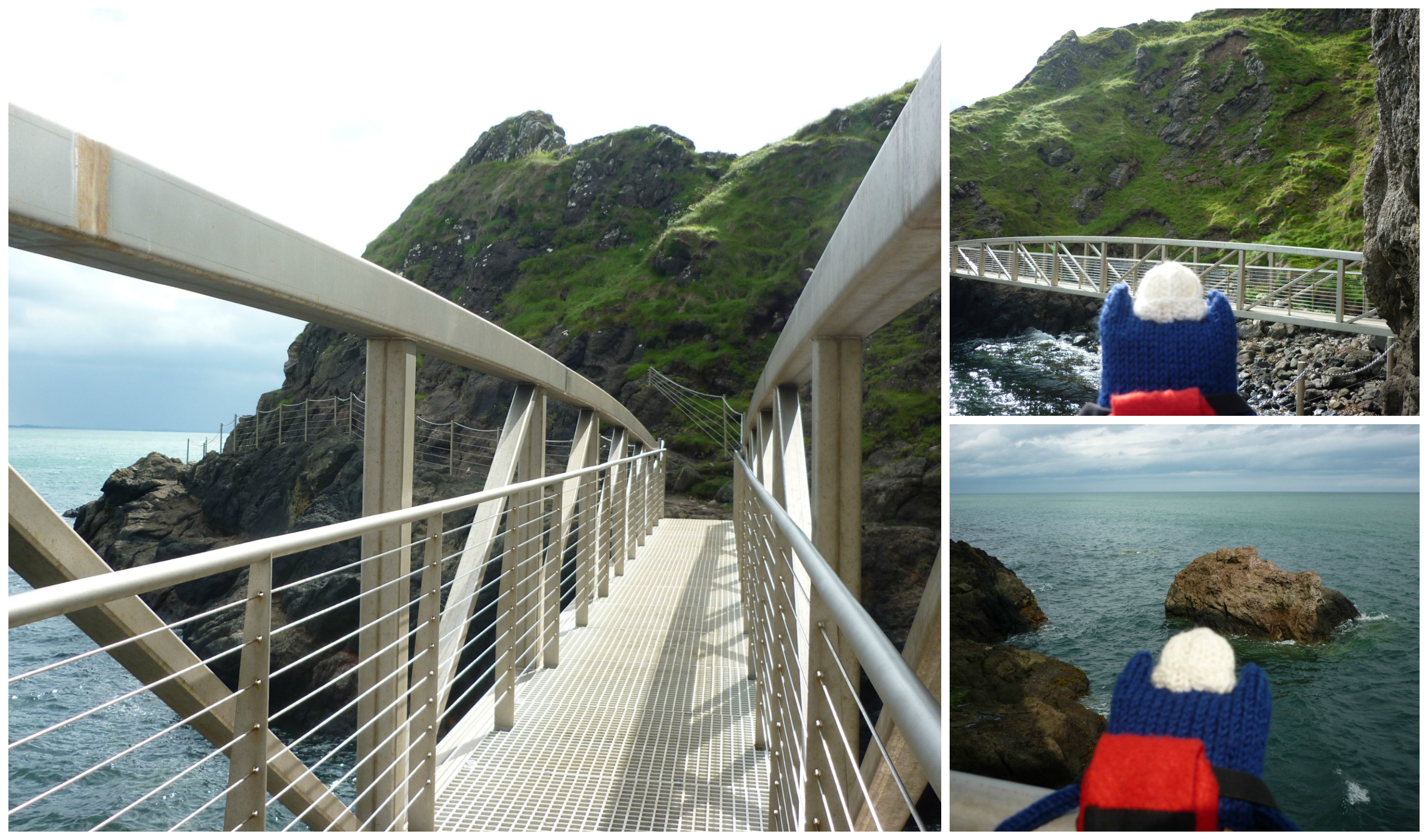
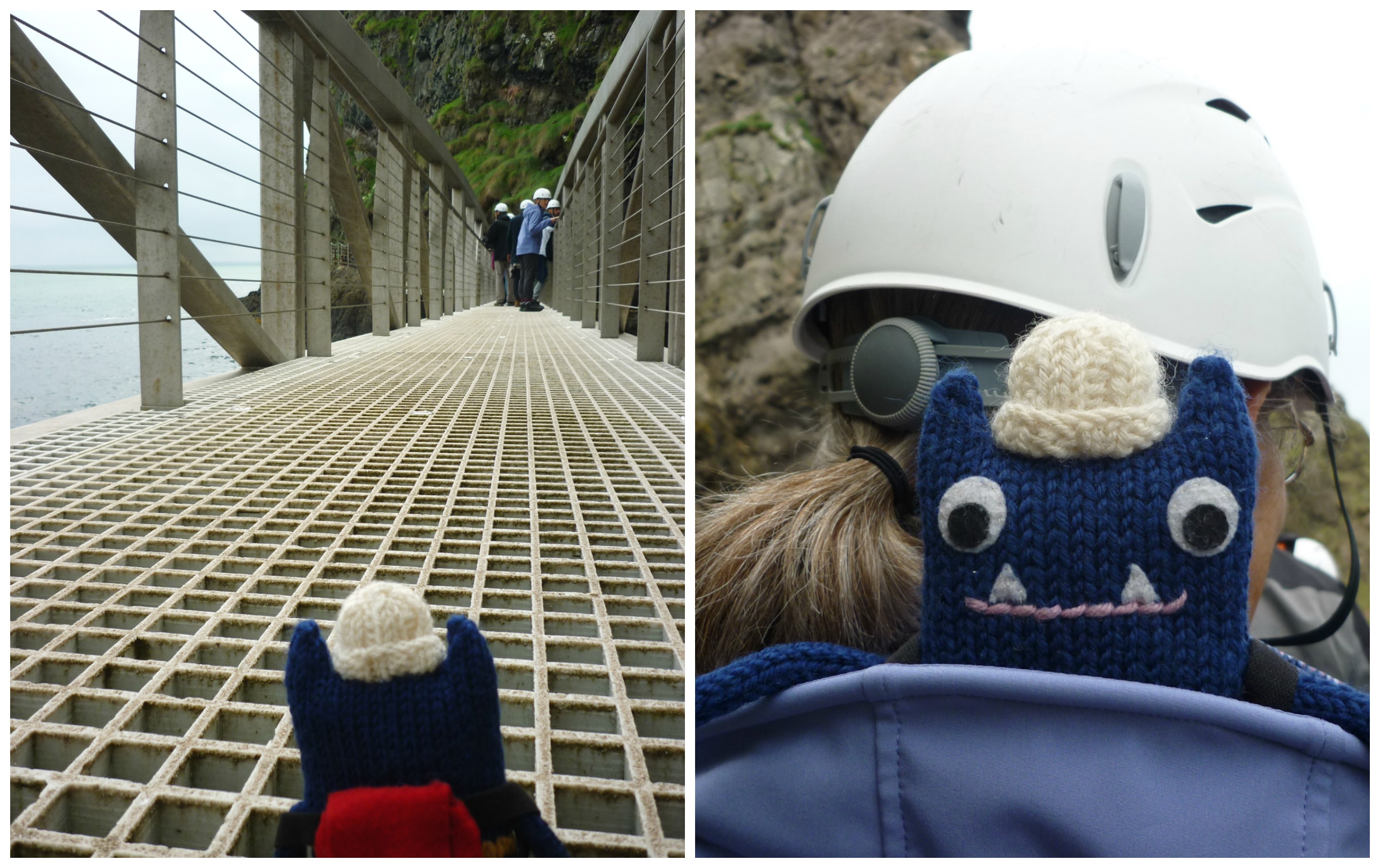
 In the picture on the top right, you can also see the remains of part of the old path, which hugged the cliff line much more closely than the current one. But the most striking part of the walk is just around the next corner – the impressive Tubular Bridge!



 The hills are probably the most striking feature in the park, and I’m sure they can be seen for miles around! These 20 metre tall earth mounds represent the spiral galaxies of Andromeda and our own galactic home, the Milky Way. Did you know that while most of the other 100 billion-odd galaxies in the universe are moving away from us, Andromeda is actually heading right in our direction? The two galaxies are expected to meet in 4 billion years’ time, and this is an interpretation of what will happen next – they’ll whirl around together, stripping lines of stars and planets from each other in a sort of crazy spinning dance. I’m pretty glad I won’t be around to see THAT!
 “Paddy, are you sure about this? Omphalos stones mark the mythical ‘navel of the world’… Who knows WHAT’S potentially lurking in there?”
 …And check this out – a whole galaxy trapped in a rock!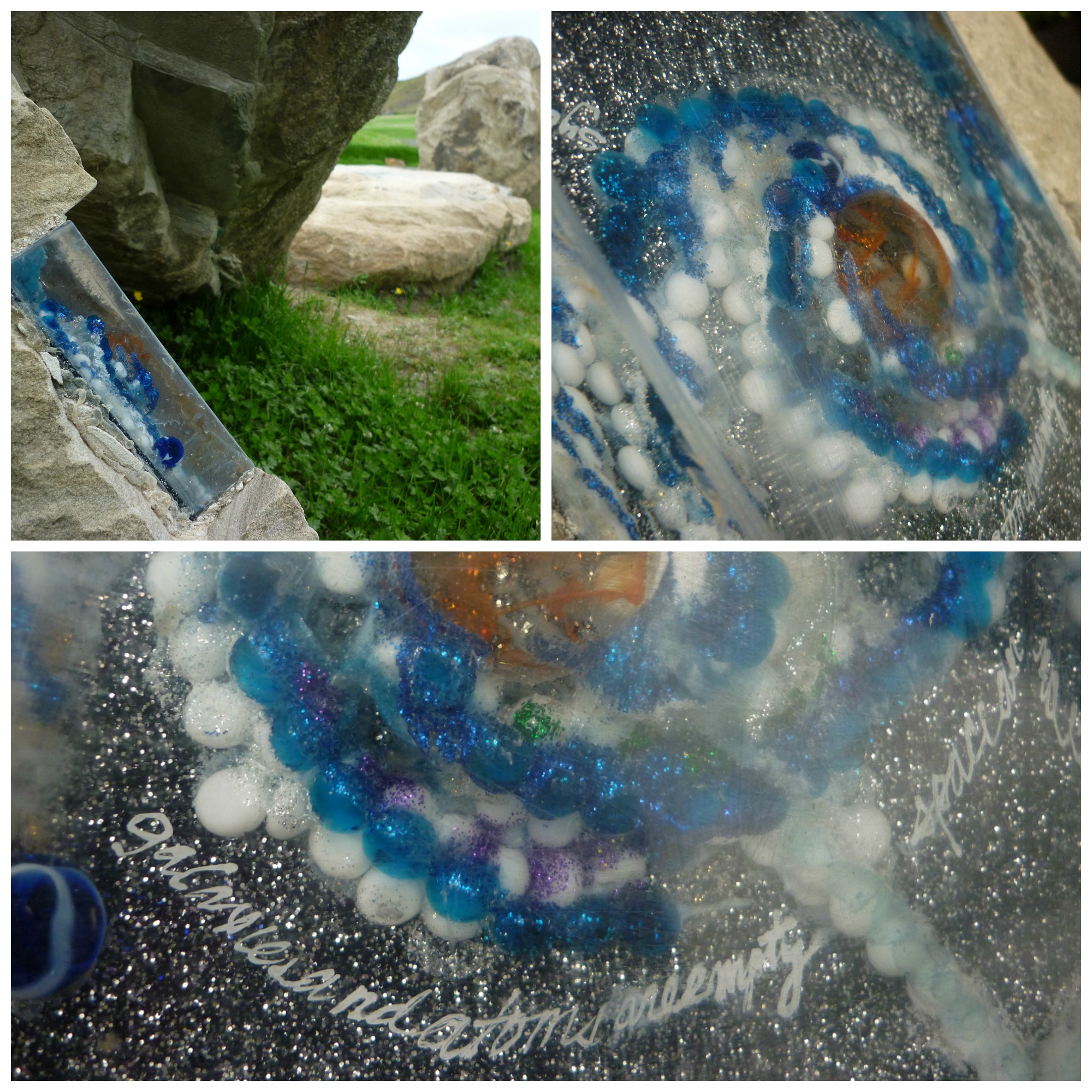
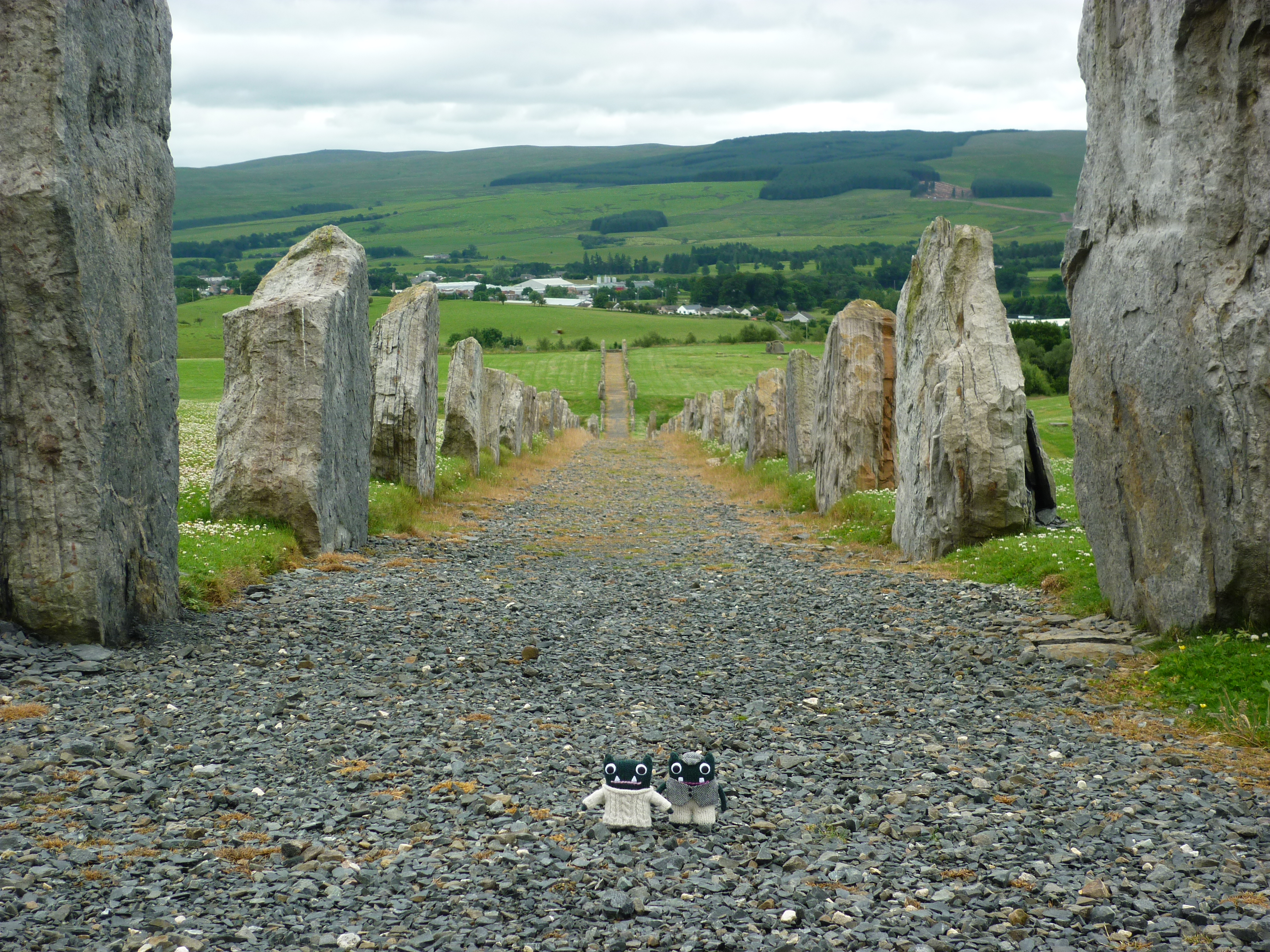
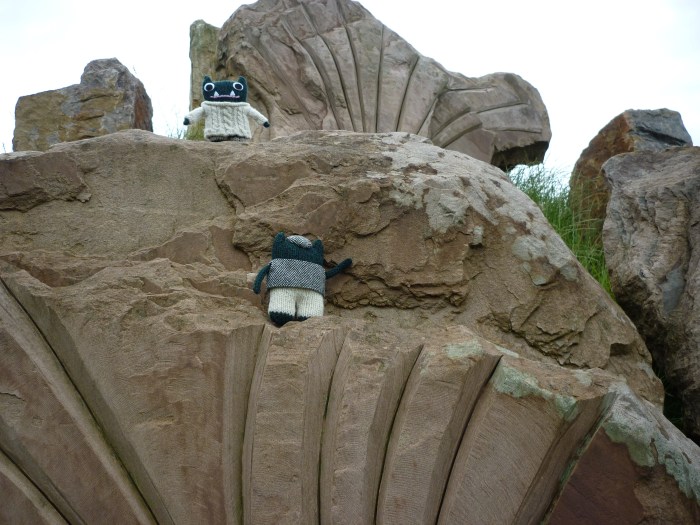 “Plunkett, I think there’s one more place we need to go…”
 “ANOTHER hill?”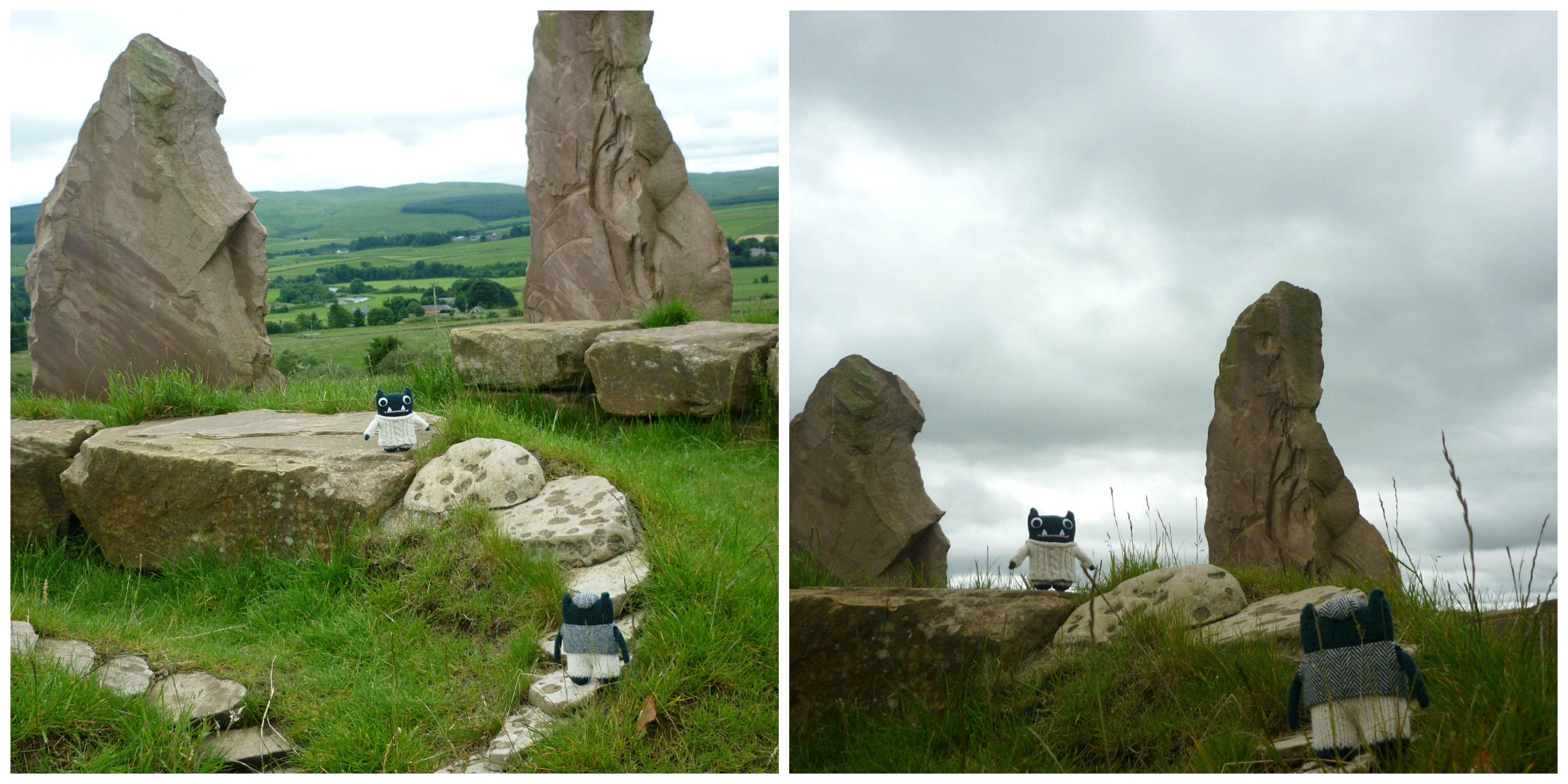
 “Not bad, Paddy. Not bad at all!
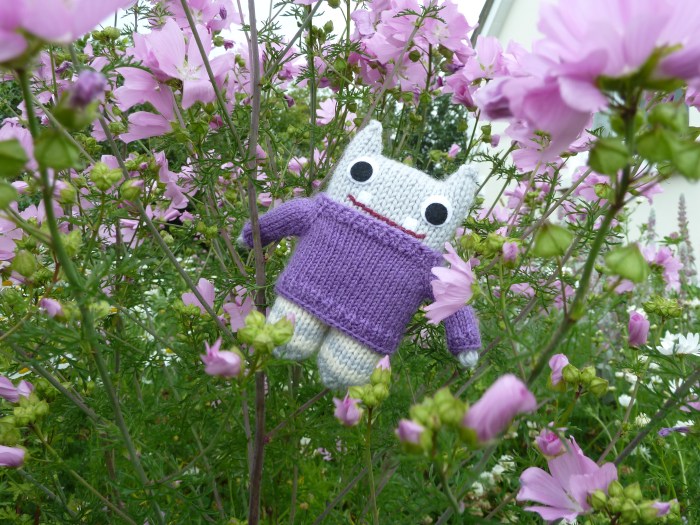 The summery mallow flowers might be in full bloom, but Woolly Jumper Beastie loves her stylish purple sweater too much to take it off! Still, it’s actually a pretty good piece of kit for an active, adventurous Beastie – its natty top-down construction keeps seam bulk to a minimum and gives her plenty of wiggle room!
 And this isn’t the only Beastie in the garden today… Who’s that hiding in the undergrowth?
 Hey there, Redhead Beastie! She’s a Barróg Beastie (one made with 100% Irish wool), which might explain why she’s drawn to all that greenery!
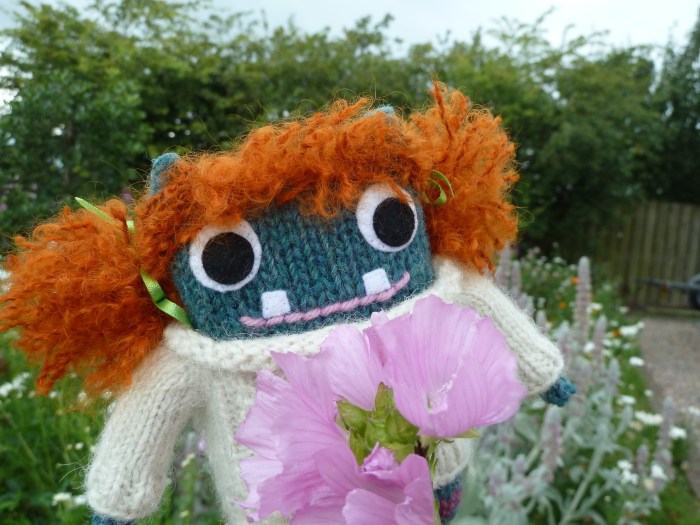 Too pretty!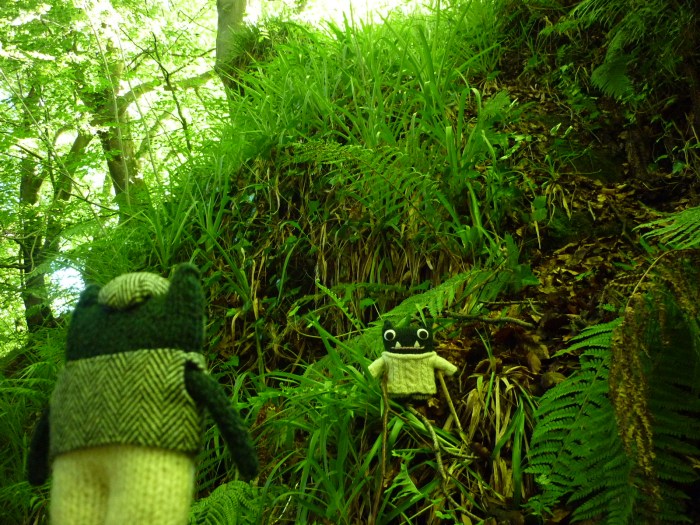





 See you again soon, lads!
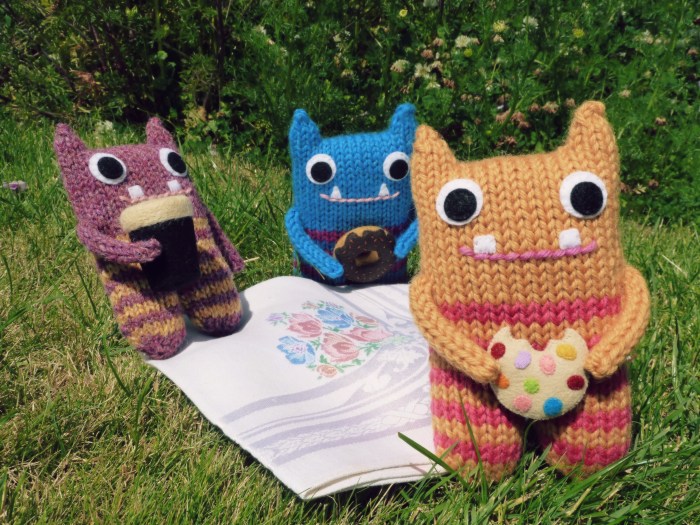

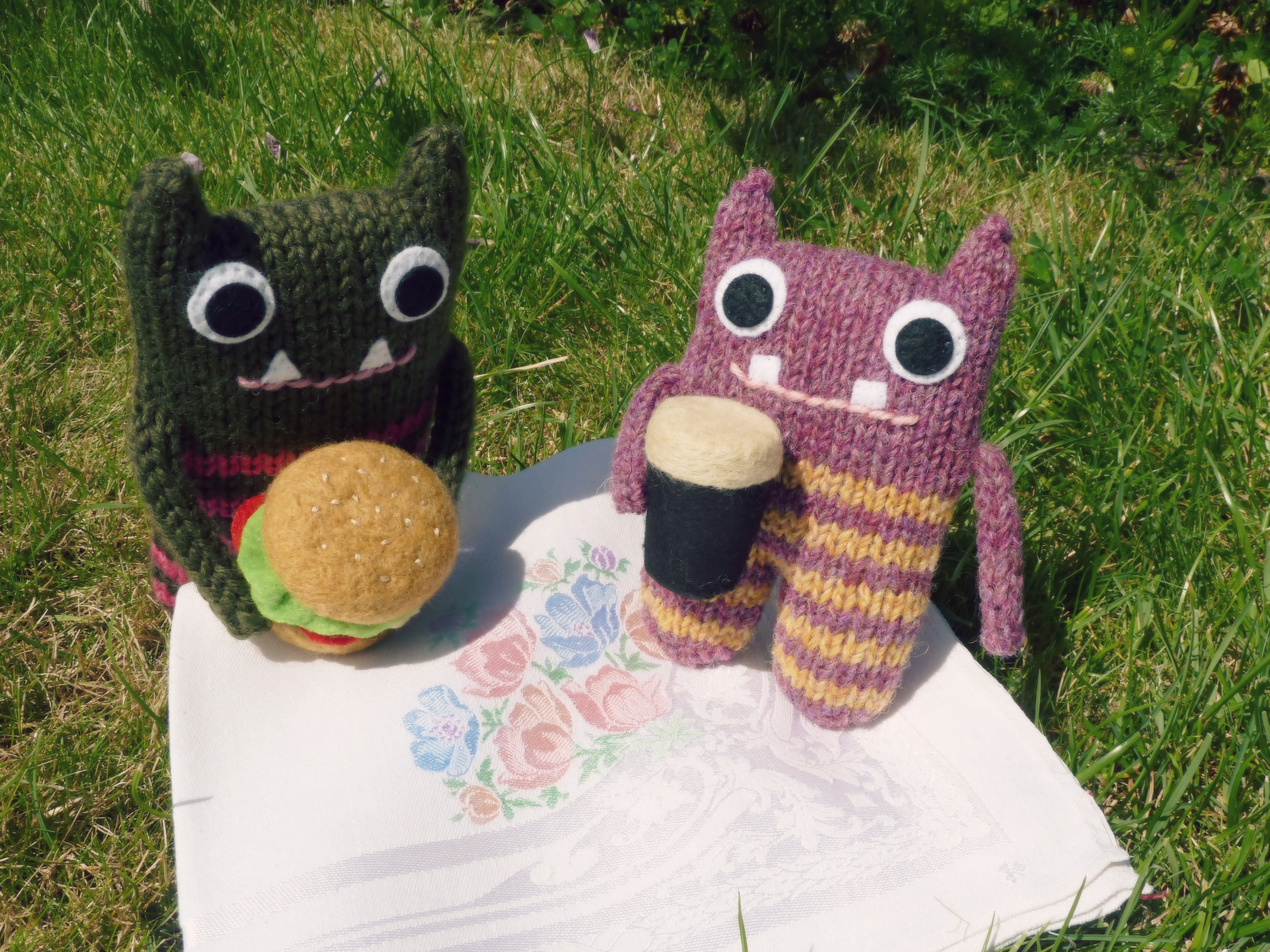
 Delicious! Burger Beastie seems to be especially enjoying the whole picnicking experience.


 Well, not exactly. A fen is an area of marshy ground, and they’re pretty prone to flooding. While many of the fens in this super-flat part of eastern England were drained to create extra farmland in the 17th century, in the Bronze Age these places would have been tricky enough to navigate. Too wet to walk, too shallow for a boat… GAAAAAAAH! What to do?
 … And what Plunkett is looking at in the first photo is only a fraction of what is actually there. The whole causeway is more than a kilometre long, and the platform is the size of Wembley Stadium!
 These bronze finds – mostly weapons – intriguingly show signs of having been deliberately damaged, and their positioning in the silty ground suggests that they were intentionally dropped there, rather than carelessly chucked away because they were broken. This implies that the causeway was a place of ritual significance, as well as (possibly) being a handy way of getting across Flag Fen!
 Meanwhile, Paddy was trying on some wooden beakers for size… Because, well, that’s what Paddy does.
 The lads also rested their weary paws on this rather spectacular chair – we think it might be made of bog oak, preserved timber that has been coloured and hardened by years of sitting in the acidic water of the marshes!
 Unfortunately, Paddy had less success with this replica dugout canoe…
 “Row faster, Plunkett! It feels like we’re not moving at all!
 It’s really been quite a trip!