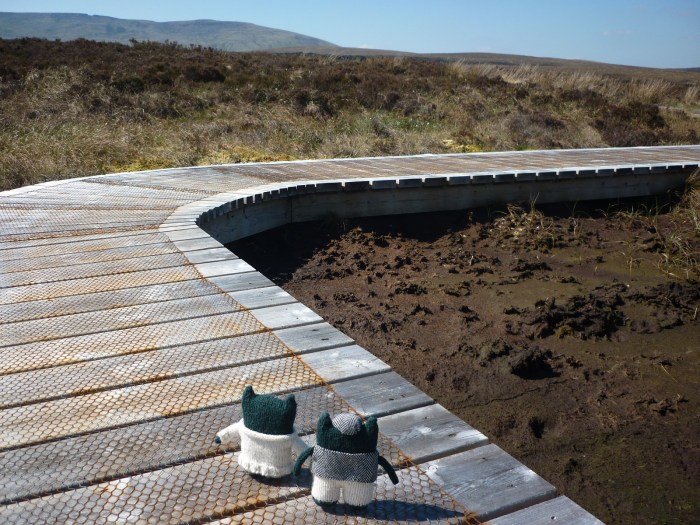
Paddy and Plunket on the Boardwalk at Cuilcagh Mountain - H Crawford/CrawCrafts Beasties

Boghopping Beasties!

The terrible twosome are back! I was looking through my old emails the other day, and I came across an unblogged Paddy and Plunkett adventure from – ta daaaah! – a bright sunny day last June. I’m not sure about you, but Spring is taking its time getting into full swing here in Dublin…
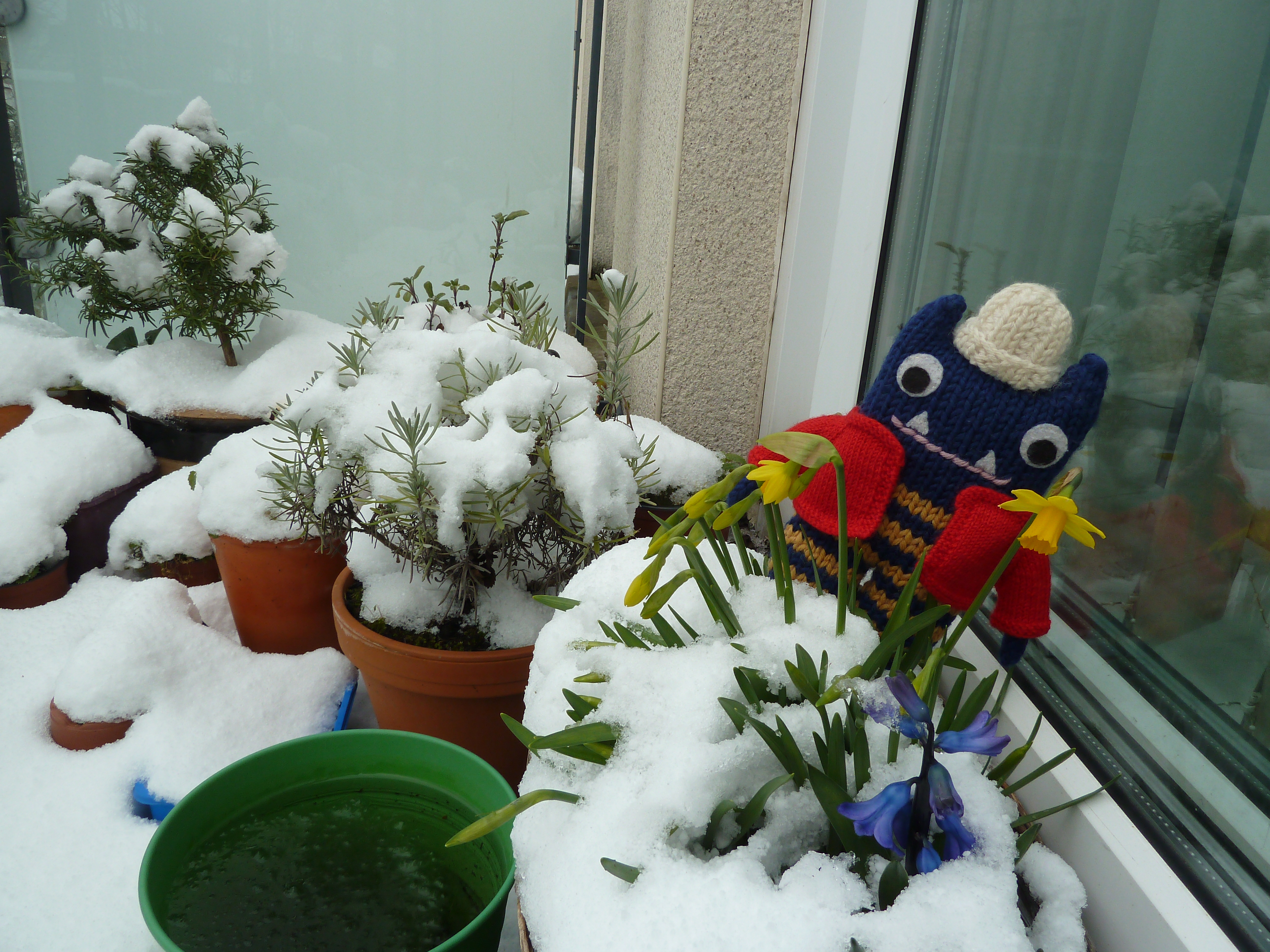
Spring in Dublin, 2018 - CrawCrafts Beasties…and with more chilly weather forecast for the weekend, I think we could all use a little extra sunshine!

So come and join us as we explore a wild and very typically Irish landscape…
Beautiful Northern Ireland Countryside - H Crawford/CrawCrafts Beasties
…A peat bog!

This blanket bog is at Cuilcagh Mountain in Co. Fermanagh, Northern Ireland, and it’s one of the most intact blanket bogs in Western Europe. But what’s a blanket bog, you ask? Well, it’s a thick carpet of peat that forms over a large area of flat or gently undulating ground, covering it like a blanket. The peat is usually about 2-3m thick, and takes thousands of years to form… Even in areas like Cuilcagh Mountain, where the high rainfall and poor drainage make for perfect bog-growing conditions!

Paddy and Plunkett were lucky enough to visit the Cuilcagh Mountain Park on a rare day when it wasn’t raining, and they bravely took to the boardwalk to explore this unusual habitat.
Paddy and Plunket on the Boardwalk at Cuilcagh Mountain - H Crawford/CrawCrafts Beasties
I don’t think they realised just how long the walk ahead was going to be, though.
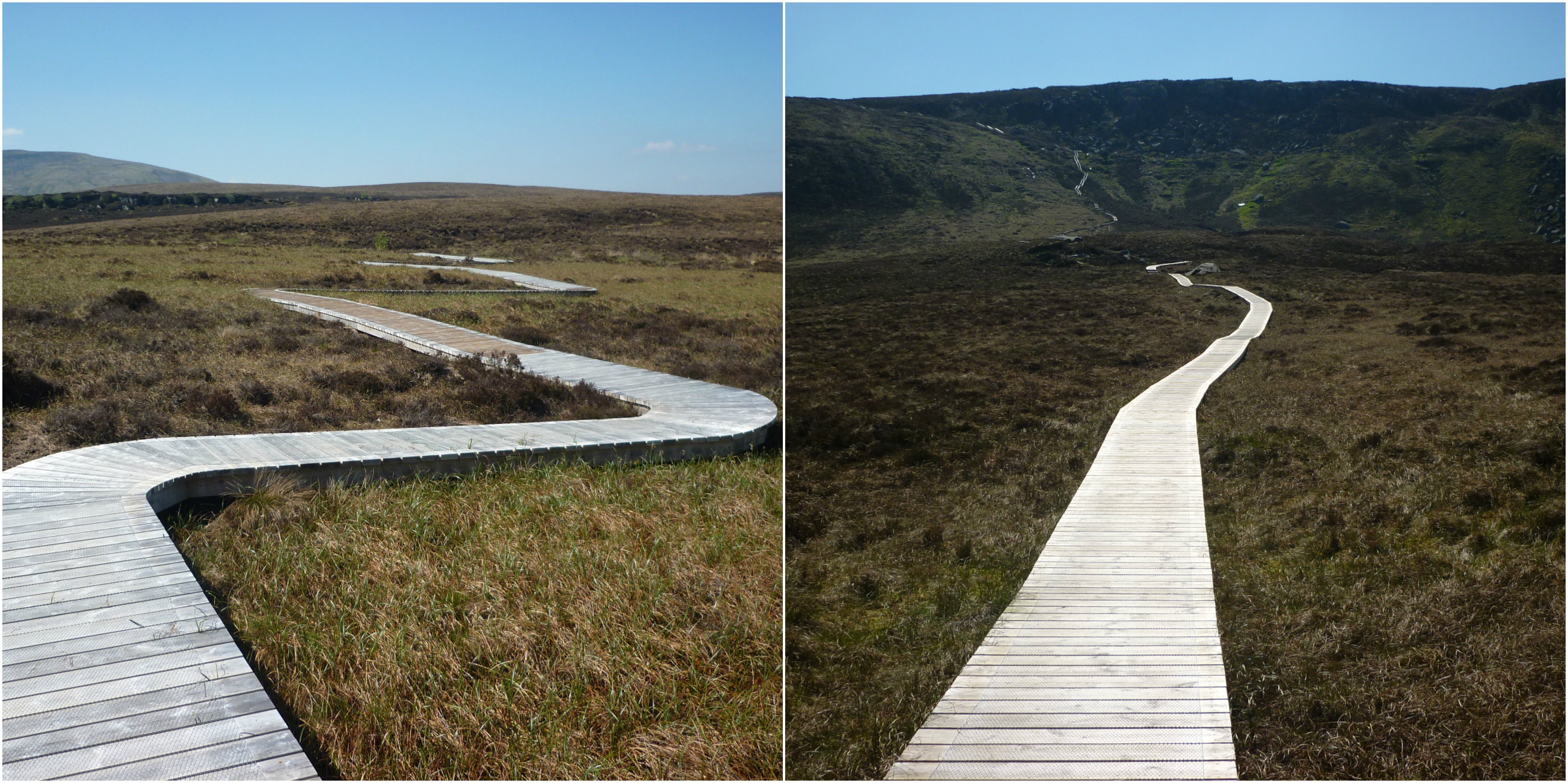
The Boardwalk at Cuilcagh Mountain - H Crawford/CrawCrafts Beasties
The boardwalk was built after the area became a park in 1998, so that rangers could begin conservation work on the bog without damaging it further. Their main task was to dam 17 miles (that’s 25km) of drainage ditches – which had been dug to facilitate peat cutting back in the day – and restore the natural water level of the bog, so that it could start to grow again. This was an immense undertaking, as all the work had to be done by hand… so it’s hardly surprising that it took the guts of 13 years to complete!

However, Paddy was a little underwhelmed by the appearance of the bog itself…
Peat Bog Scenery - H Crawford/CrawCrafts Beasties
“Ah, Plunkett! It’s just grass and squishy bits! What’s special about this?”
“You have to look a little closer, Paddy…”
All the Mosses of the Bog - H Crawford/CrawCrafts Beasties
“… Because although they’re not very big, the plants here are specially adapted to life in these strange, squelchy places. And look at those colours!”

Plunkett also explained that bogs are one of the best weapons we have against climate change, by being massive carbon sinks. It’s estimated that boglands in the northern hemisphere alone have about 450 billion tonnes of carbon squirreled away in long-term storage, and undisturbed peat bogs are continuously adding to this stockpile at a rate of 0.7 tonnes per hectare per year. You can find out more here!
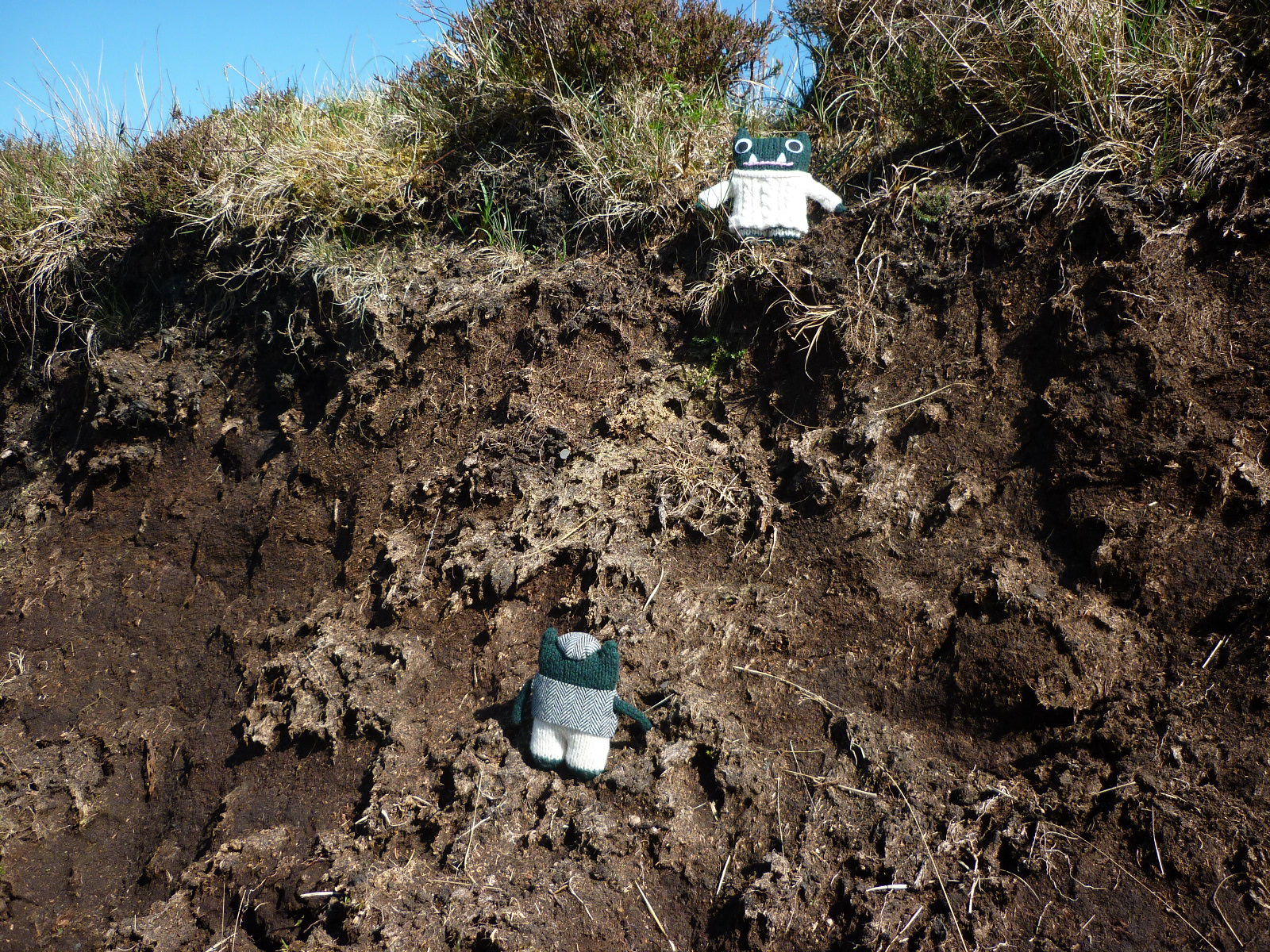
Paddy and Plunkett Check Out the Peat Bog - H Crawford/CrawCrafts Beasties
“We’re also very lucky to have so many of them so nearby, Paddy! Less than 2% of the earth’s land surface is made of blanket bogs, compared with the 7% covered by rainforest!”

Talk about a turnaround! That rousing speech had Paddy galloping ahead to see as much of the park as possible!
Taking in the Bog at Cuilcagh Moutain - H Crawford/CrawCrafts Beasties
“Keep up, Plunkett!”
Paddy and Plunkett Climbing Cuilcagh Mountain - H Crawford/CrawCrafts Beasties
And the view from the top of the mountain was definitely worth waiting for!
The View From Cuilcagh Mountain - H Crawford/CrawCrafts Beasties
They even met a couple of distant cousins on the way home.
Distant Beastie Relatives! H Crawford/CrawCrafts Beasties
Hope that’s got you all in a nice summery mood! And have any of you had a chance to visit one of these wondrous landscapes? Let us know in the comments!

We’ll have more Beastie adventures next Tuesday – plus I’ve an artsy Friday Social planned for the end of the week, so don’t forget to swing by for that! See you then!


Meet Paddy & Plunkett!

Paddy & Plunkett by CrawCrafts Beasties/Heather Crawford
Regular visitors to the Beasties’ Facebook page will recognise these handsome characters from my St Patrick’s Day post! For everyone else, allow me to introduce Paddy…
Paddy Beastie - CrawCrafts Beasties/Heather Crawford
…and Plunkett!
Plunkett Beastie - CrawCrafts Beasties/Heather Crawford
Normally I let a Beastie’s adoptive parents choose their names, but my mum was quite taken with this pair when I brought them with me on a recent visit home. I left them sitting on the kitchen table while I went upstairs to fetch something, and by the time I came back down again, they had already been christened Paddy and Plunkett. And the names stuck, because they suit them perfectly. They’re also about as Irish as you can get, which is a good thing… because Paddy and Plunkett are about as Irish as Beasties get! They’re “Barróg Beasties” – a local subspecies of Beastie, grown from 100% Irish wool. They’re just as fond of humans as my other Beasties… in fact, “barróg” is the Irish word for “hug”, so you can be sure of a warm welcome if you come across one in their natural habitat!

Speaking of natural habitats, who better than these two to show you around some of the little-known corners of County Fermanagh?

Our tour begins in Tully Castle, an old fortified house whose Irish name means “castle on the hill”. Plunkett at Tully Castle - CrawCrafts Beasties/Heather Crawford

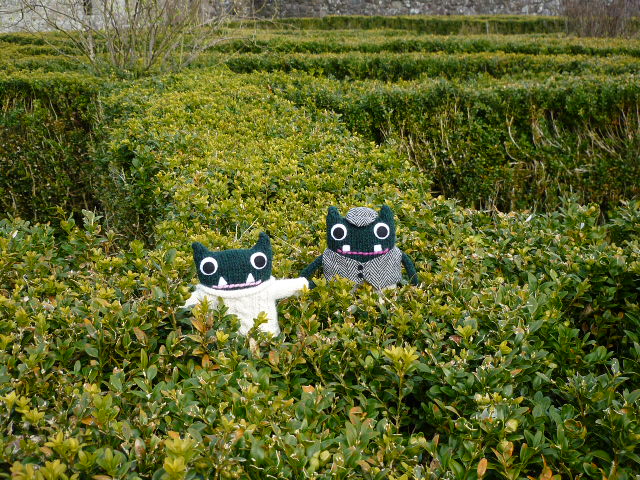
It was abandoned after an unpleasant incident during the Irish Rebellion of 1641 – you can read the full story here – and is now a State Care Historic Monument with a rather impressive knot garden.
Paddy & Plunkett in the Knot Garden at Tully Castle - CrawCrafts Beasties/Heather Crawford
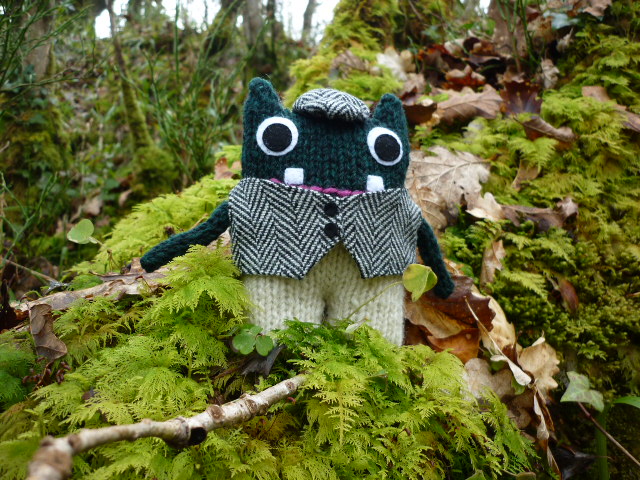
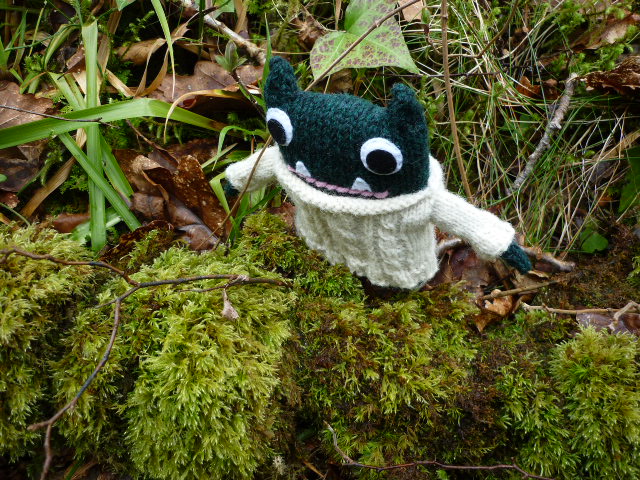
Next stop is Correl Nature Reserve, the perfect place for a pair of Beasties to relax in some nice soft moss!
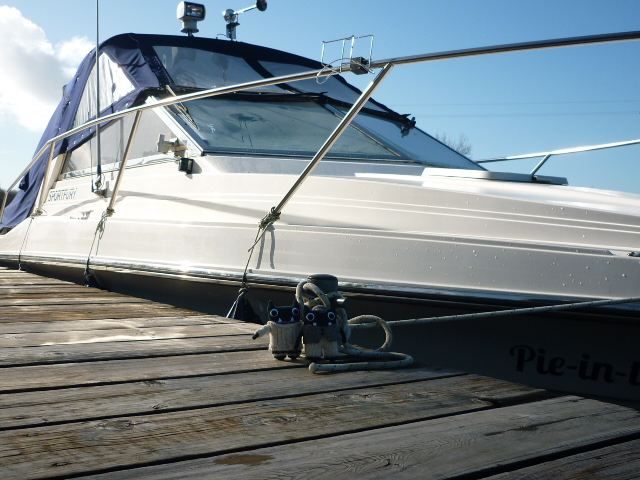
Plunkett takes a weight off! CrawCrafts Beasties/Heather CrawfordPaddy checks out some moss - CrawCrafts Beasties/Heather CrawfordOne of the biggest draws in Co. Fermanagh is the lakes. Upper and Lower Lough Erne link into the Shannon-Erne Waterway, which is part of a canal system that starts in the estuary of the River Shannon in south-west Ireland, runs through Co. Leitrim and Co. Cavan, before crossing the border into Northern Ireland. This makes the area incredibly popular for boating holidays… and Paddy and Plunkett couldn’t wait to join in the fun!
Paddy and Plunkett set sail - CrawCrafts Beasties/Heather Crawford

Back on dry land, there was just enough time for one last stop before they headed for home – Fardross Forest, a short hop away in Co. Tyrone! Paddy went on ahead to open the gate…
Paddy at the gate - CrawCrafts Beasties/Heather Crawford
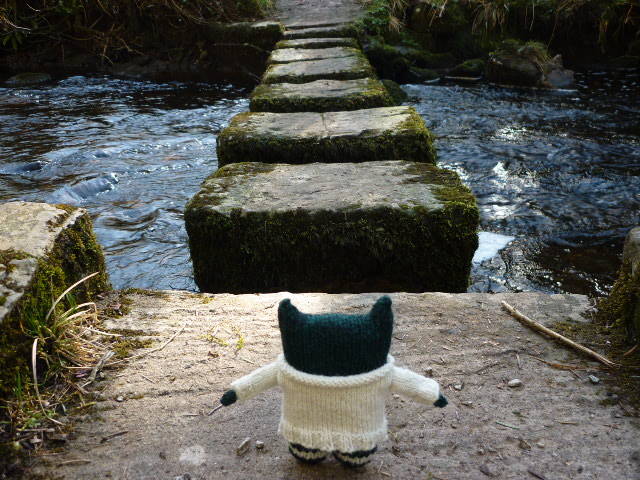
… Before tackling the stepping stones across the river!
Paddy at the River - CrawCrafts Beasties/Heather Crawford
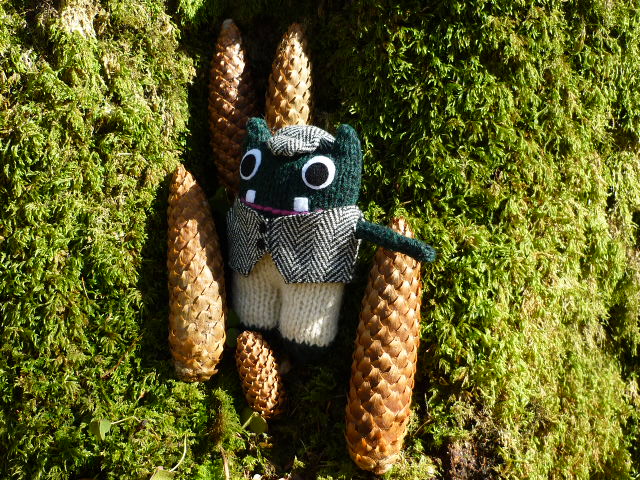
Meanwhile, Plunkett took a stroll around the forest. He’s a more laid-back, long-walks-in-the-countryside kind of guy. Here he is posing with some pine cones he collected during his wanderings.
Plunkett's Pine Cones - CrawCrafts Beasties/Heather Crawford
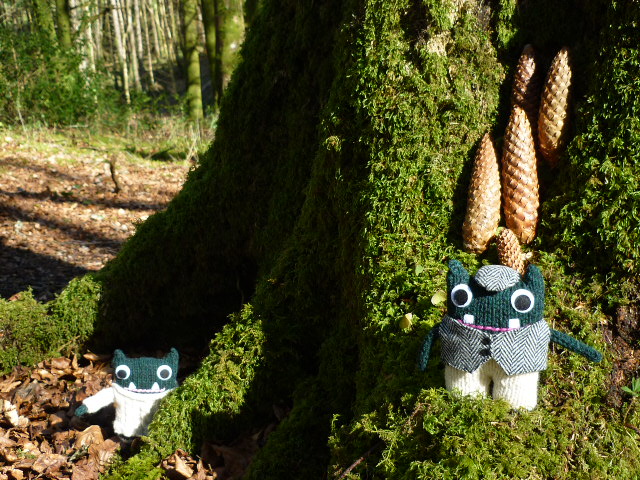
Ah, Paddy’s back!
Paddy and Plunkett in Fardross Forest - CrawCrafts Beasties/Heather Crawford
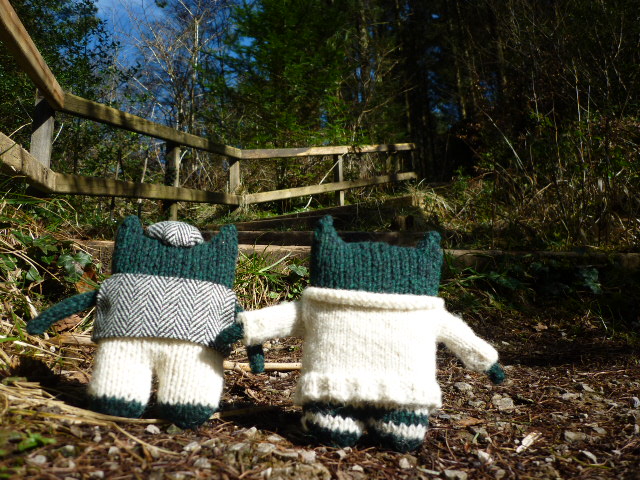
Looks like he managed to cross the river without falling in! And now it’s time for these two to start the journey home – hopefully there will be a nice mug of tea and a big dinner waiting for them when they get back!
Paddy and Plunkett head for home - CrawCrafts Beasties/Heather Crawford